
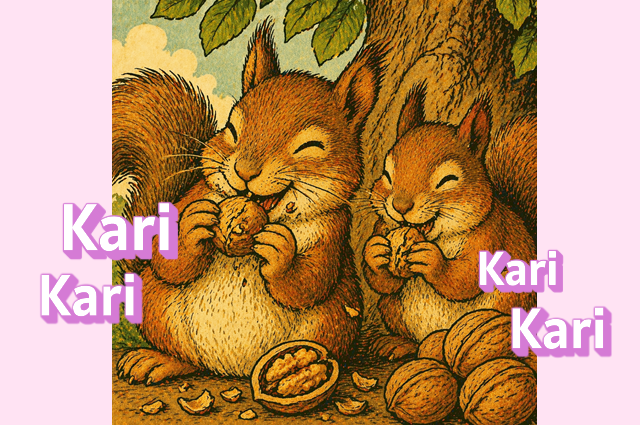
Have you ever bitten into a crispy snack?
Or heard the sound of something lightly scratching on a surface?
That light, dry, crisp sound in Japanese is expressed as:
“Kari Kari” (かりかり)
Let’s hear how it sounds!
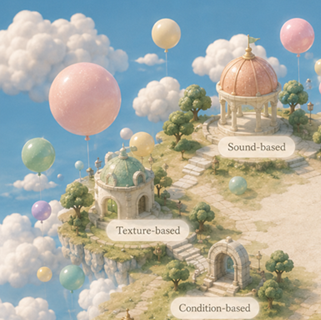
What is “Kari Kari” (かりかり)?
“Kari Kari” describes:
- A light, crisp crunching sound
- A dry scratching or scraping sound
- Repeated small actions that feel sharp but not heavy
It’s often used for:
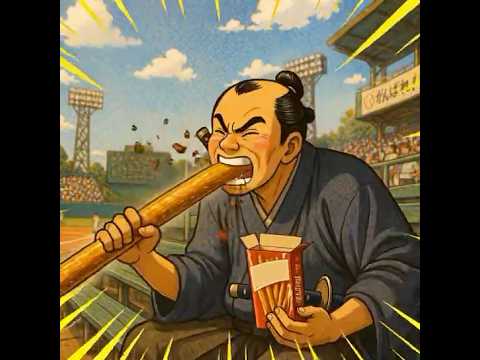
- Eating crispy or dry foods
- Writing or scratching with something sharp
- Small animals nibbling or gnawing
Pronunciation
kah-ree kah-ree
(Say it lightly and quickly — like small, repeated sounds.)
Categories
Sound / Texture
What Does “Kari Kari” Look Like?
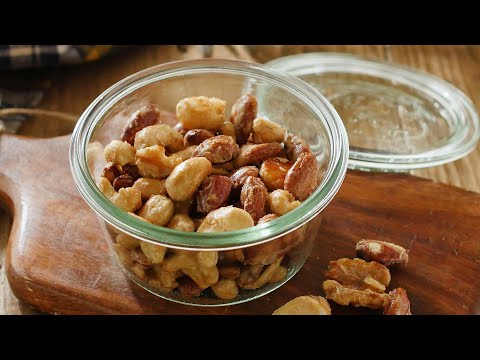
It looks like someone biting into a crispy snack.
Like a pencil moving quickly across paper.
Like a squirrel nibbling on a nut.

How Do You Say It?
Say it in small, quick beats:
Kari kari…
Like tiny, repeated sounds —
dry, crisp, and rhythmic.
Examples in Daily Life
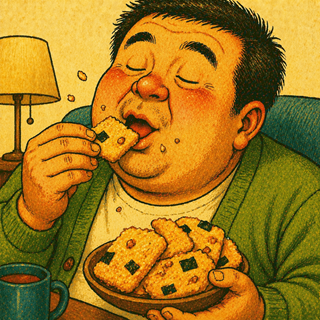
Example 1: Eating a snack
He sat on the sofa,
quietly eating chips —
kari kari…
Example 2: Writing notes
She wrote something down quickly —
kari kari.

Cultural Note
In English, you might say:
- “Crunch crunch”
- “Scratch scratch”
- “Nibble”
But “kari kari” has a specific nuance:
Light, dry, crisp sound
Small, repeated motion
Not soft or juicy — but dry and sharp
Compared with similar words:
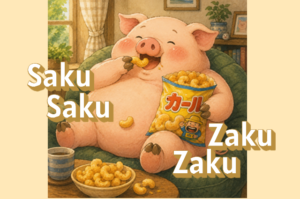
- Saku Saku さくさく → light, airy crispness
- Pari Pari ぱりぱり → thin, snappy crispness
- Kari Kari かりかり → harder, drier, more scratchy or biting
Watch & Feel the “Kari Kari” World!
Feel the “Kari Kari” — Crisp Nuts
Try Using It!
When something makes a crisp, dry sound…
When you bite into something crunchy…
When something scratches lightly…
Say it lightly:
Kari kari〜




Comments