
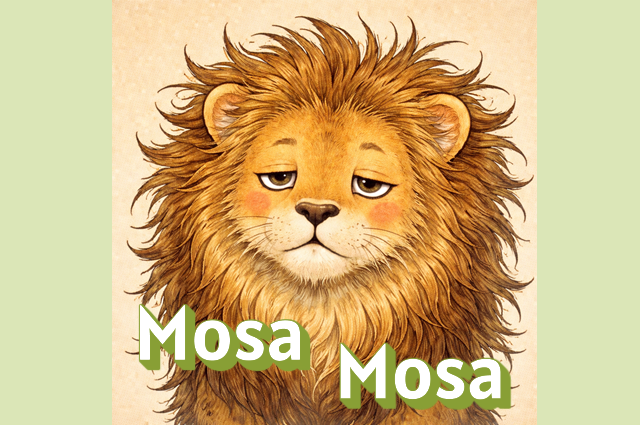
Ever seen hair that’s overgrown and wild, sticking out in all directions?
Or a garden left untended, thick with weeds and bushes?
That’s when the Japanese onomatopoeia “Mosa Mosa” (もさもさ) comes in —
a sound-and-feel word for messy volume that lacks neatness, style, or refinement.
Before we dive in, let’s hear how it sounds:
What is “Mosa Mosa” (もさもさ)?
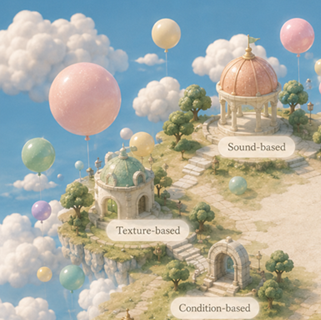
“Mosa Mosa” is used to describe:
- Unkempt or messy hair — too long, sticking out, wild
- Overgrown vegetation — thick grass, weeds, bushes
- Rough textures or fuzzy outlines — when something looks bulky and undefined
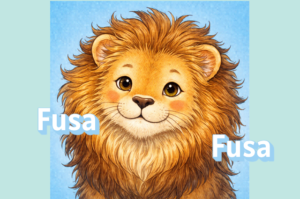
Unlike “fusa fusa,” which is soft and fluffy in a positive way,
“mosa mosa” often carries a slightly negative or neglected nuance.

Pronunciation
moh-sah moh-sah
(Say it with a heavy, cluttered feeling — not clean or elegant.)
Categories
Condition / Visual
What Does “Mosa Mosa” Look Like?
It looks like a haircut long overdue.
It looks like weeds growing thick behind an old shed.
It looks like a fuzzy sweater after too many washes.

How Do You Say It?
Say it like you’re brushing away something thick and heavy:
Mosa… mosa…
When hair won’t stay down,
when bushes take over the path —
mosa mosa.
Examples in Daily Life
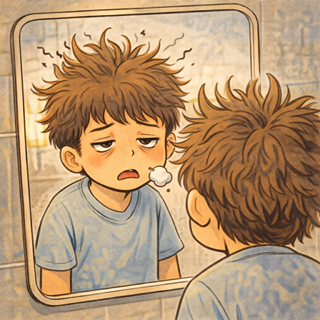
Example 1: Messy hair
He looked in the mirror
and sighed at his mosa mosa morning hair.
Example 2: Overgrown yard
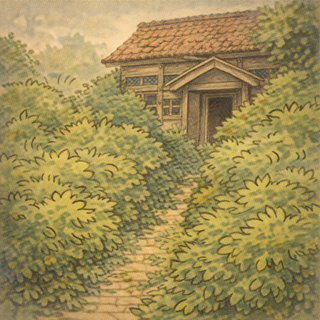
The path to the old house
was hidden behind mosa mosa bushes.
Cultural Note
In English, you might say:
- “Messy”
- “Overgrown”
- “Shaggy”
- “Fuzzy”
But “mosa mosa” adds a weight and texture to the image —
it’s not just untidy, it’s thick and hard to manage.
It often suggests something that needs trimming or cleaning,
whether it’s hair, nature, or even emotions that feel tangled.
Compare it with:
- ふさふさ → soft, full, and neat
- もさもさ → heavy, wild, and unrefined
Try Using It!
When you see an overgrown garden…
When your bedhead won’t behave…
When your cozy scarf is a little too bulky…
Say it honestly:
Mosa mosa〜







Comments