
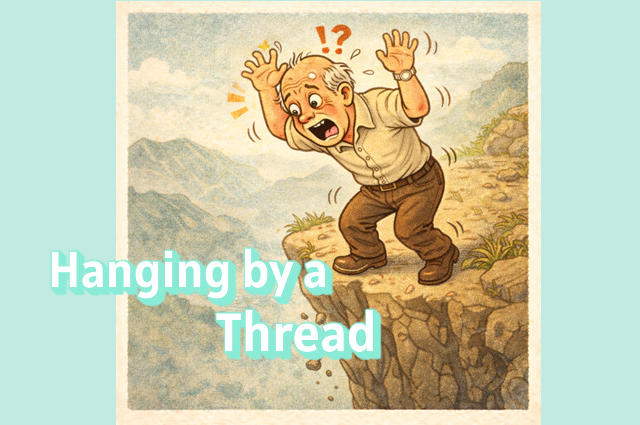
In English-language anime and manga, tense last-minute moments are often described with phrases like “Just in time,” “By a hair,” or “Hanging by a thread.”
These are the moments when:
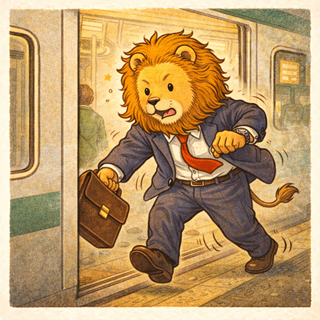
- a character slides through the closing train doors
- someone passes an exam by one point
- a hero grabs the edge of a cliff at the last second
But how are these razor-thin moments expressed in Japanese?
Let’s step into the world of anime and manga and discover how Japanese onomatopoeia captures that tight, nerve-wracking edge.
What Is a “Just Barely” Moment?
It’s when you survive — but only barely.
In anime and manga, this happens when:
- a character dodges an attack at the last second
- someone submits homework right before the deadline
- a train departure clock hits 00:00 as the doors close
In English, these moments are described as:
- Just in time – Arriving at the last possible second
- By a hair – Succeeding with almost no margin
- Hanging by a thread – In a fragile, critical state
- Barely – Only just enough
But Japanese condenses all of that tension into one rhythmic word.
How Is This Feeling Expressed in Japanese?
Japanese uses mimetic words to capture not just sound — but pressure and limits.
The standout word for these tight, edge-of-the-line situations is:
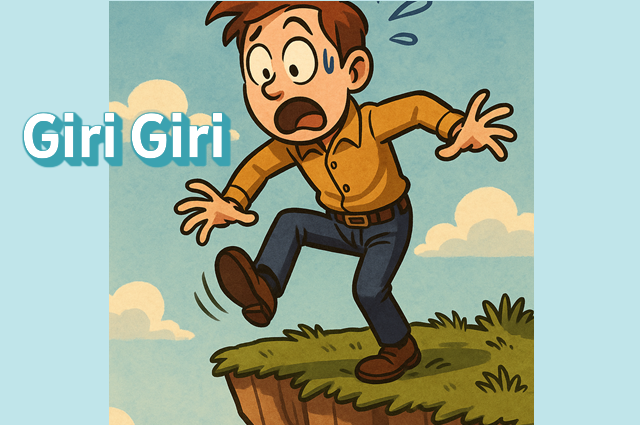
“Giri Giri” (ぎりぎり)
It expresses being right at the limit — of time, space, or rules.
Let’s feel how it sounds.

What Is Japanese Onomatopoeia “Giri Giri (ぎりぎり)” ?
“Giri Giri” describes situations that are extremely tight — in terms of time, space, or limits.
It often carries a sense of nervous tension or last-minute survival.
Used for:
Time
- Arriving just before something closes
- Meeting a deadline at the final second
Space
- Squeezing through a narrow gap
- Parking with almost no room
Limits
- Passing a test by one point
- Staying just within the rules
- Financially scraping by
It’s the sound of pressure pressing right up against the edge.
Pronunciation
gee-ree gee-ree
(Say it with a tight tone — like you’re clenching your teeth a little.)
Category
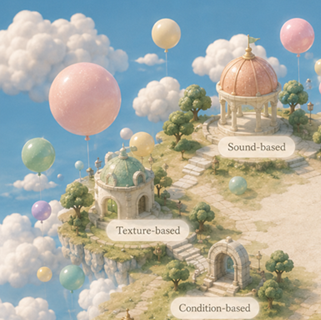
Condition
Examples in Daily Life
To learn about how it appears in manga or daily conversation, dive into the following page:
Examples











Comments