
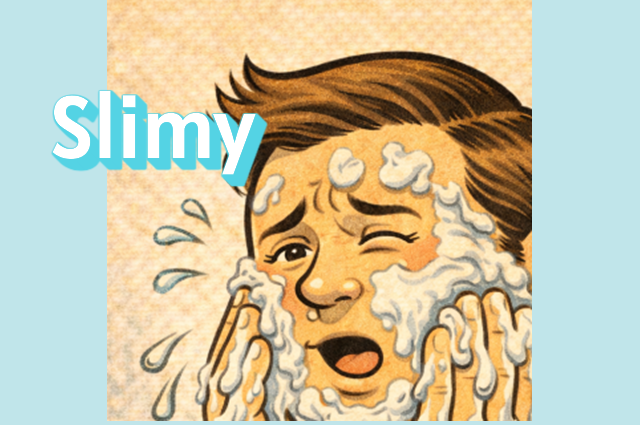
In English, we describe certain textures as:
- Slimy
- Slippery
- Gooey
- Sticky and smooth
It’s the feeling when something slides easily under your fingers — sometimes smooth, sometimes a little unpleasant.
Think of things like seaweed, slime, or something coated in a slick layer.
But how does Japanese capture that slippery, gooey sensation with a repeating rhythm?
Let’s step into the world of Japanese onomatopoeia and discover the sound of sliminess.
What Is a “Slimy / Slippery” Moment?
It’s when:
- Something slides through your fingers
- A surface feels coated and slick
- Food has a viscous, slippery texture
- A creature moves smoothly because of slime
In English, we might say:
- Slimy – Covered in slippery mucus-like texture
- Slippery – Hard to grip because it slides
- Gooey – Thick and sticky in a soft way
- Slick – Smooth and slippery
But Japanese expresses that texture and movement with a vivid sound.
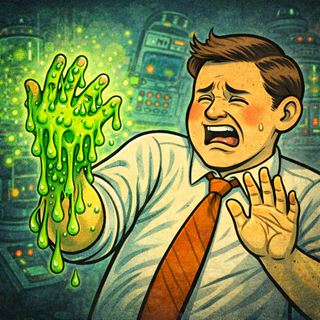
How Is This Feeling Expressed in Japanese?
Japanese often uses repeating sounds to represent textures you can feel.
The standout word for slippery sliminess is:
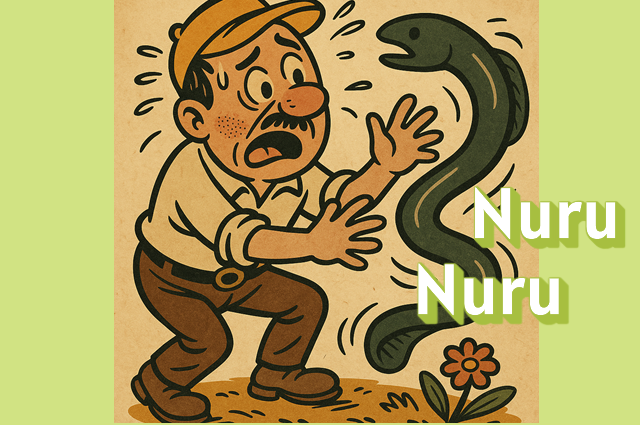
“Nuru Nuru” (ぬるぬる)
It captures both the touch and the movement of something slimy.
Let’s feel how it sounds.
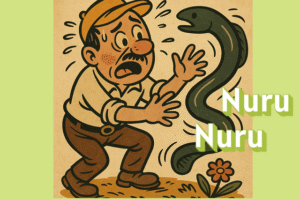
What Is Japanese Onomatopoeia “Nuru Nuru (ぬるぬる)” ?
“Nuru Nuru” describes:
Slimy Texture
- Something coated in slippery liquid
- Gooey or mucous-like surfaces
- Viscous textures
Slippery Movement
- Something sliding smoothly
- Creatures moving with a slick motion
- Objects slipping because of slime
It often carries a nuance of unpleasant sliminess.
However, in food contexts — like natto or seaweed —
the same texture can be appreciated as part of the dish.

So “nuru nuru” can feel:
- Slightly gross
- Or strangely satisfying
depending on the situation.
Pronunciation
nu-roo nu-roo
(Say it slowly, with a slippery sound, like your tongue is sliding inside your mouth.)
Category
Texture
Examples in Daily Life
To learn about how it appears in manga or daily conversation, dive into the following page:
Examples









Comments