
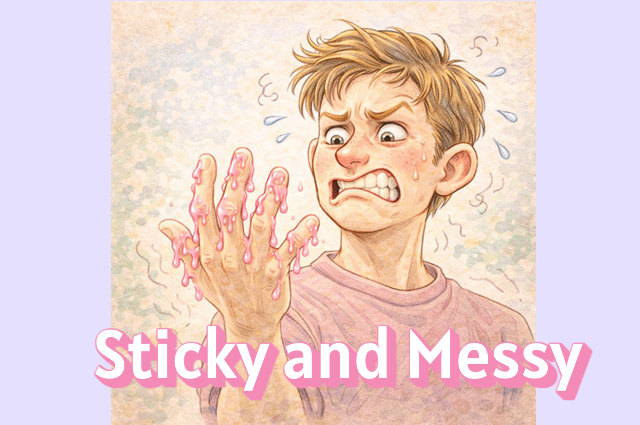
In English, we describe unpleasant sticky textures as:
- Sticky
- Gooey
- Clingy
- Grimy
It’s the feeling when thick liquid or residue sticks to your skin and won’t easily come off.
Think of honey on your fingers, syrup on a table, or oily food residue on your hands.
But how does Japanese capture that uncomfortable stickiness with a repeating rhythm?
Let’s step into the world of Japanese onomatopoeia and discover the sound of messy stickiness.

What Is a “Sticky Mess” Moment?
It’s when:
- Honey or syrup sticks to your hands
- Sauce clings to your face or fingers
- Oil or residue makes a surface feel dirty
- Something feels uncomfortable and hard to clean
In English, we might say:
- Sticky – Something that clings to surfaces
- Gooey – Thick and messy
- Grimy – Dirty and sticky with residue
- Clingy – Hard to remove once attached
But Japanese expresses that unpleasant texture with a vivid sound.

How Is This Feeling Expressed in Japanese?
Japanese often uses repeating sounds to describe tactile sensations.
The standout word for unpleasant stickiness is:
“Beto Beto” (べとべと)
It captures the feeling of thick residue sticking everywhere.
Let’s feel how it sounds.
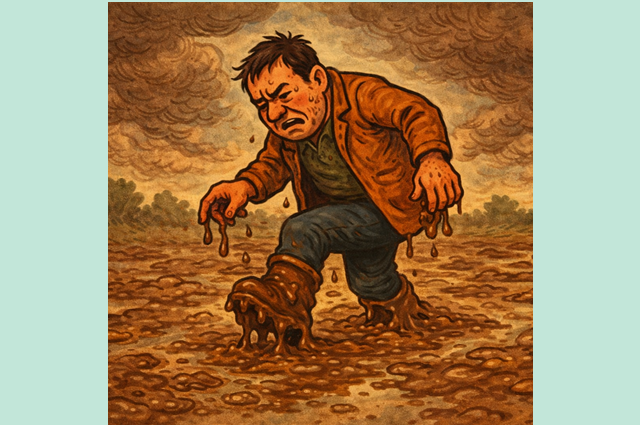
What Is Japanese Onomatopoeia “Beto Beto (べとべと)” ?
“Beto Beto” describes:
Sticky Residue
- Honey or syrup on skin
- Oil or sauce on hands
- Food residue that clings stubbornly
Uncomfortable Dirtiness
- Surfaces that feel dirty and sticky
- Sweat or oil making skin feel unpleasant
- Something that feels messy and hard to clean
Unlike neutral or pleasant stickiness like “neba neba,”
“beto beto” almost always carries a negative nuance.
It feels messy.
Uncomfortable.
And hard to get rid of.
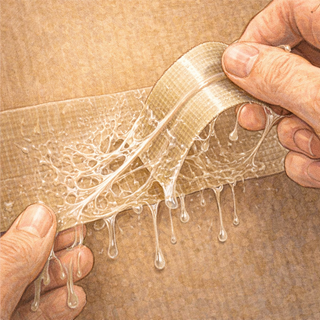
Pronunciation
beh-toh beh-toh
(Say it with slight disgust — as if your fingers are already stuck together.)
Categories
Texture
Examples in Daily Life
To learn about how it appears in manga or daily conversation, dive into the following page:
Examples











Comments