
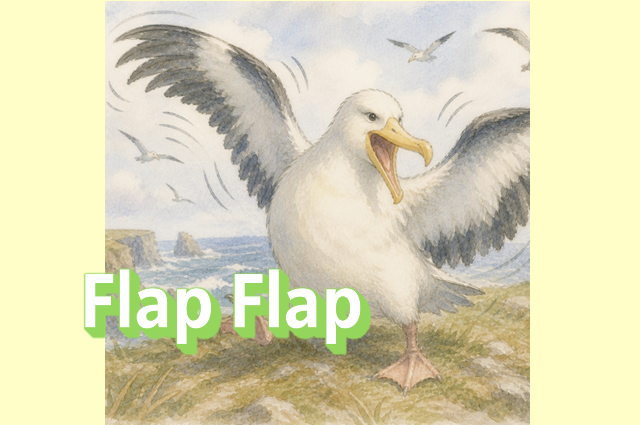
In English, we describe these scenes as:
- Flap flap
- Rushing around
- Hectic
- Running back and forth
It can be the sound of cloth or wings flapping —
or the feeling of people moving quickly in a busy, chaotic situation.
But how does Japanese capture both the sound and the sense of busyness with one rhythm?
Let’s step into the world of Japanese onomatopoeia and discover the sound of motion and hustle.
What Is a “Flapping / Busy” Moment?
It’s when:
- Cloth or flags flap in the wind
- Birds flap their wings
- People rush around preparing for something
- A place becomes noisy and active suddenly
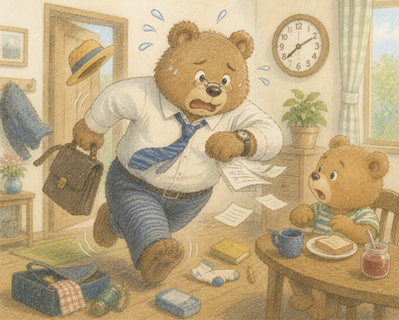
In English, we might say:
- Flap – Repeated movement of cloth or wings
- Rush – Moving quickly with urgency
- Hectic – Busy and chaotic
- Bustling – Full of active movement
But Japanese blends sound and situation into one expression.
How Is This Feeling Expressed in Japanese?
Japanese often uses repeating sounds to express both motion and atmosphere.
The standout word for flapping and busy movement is:
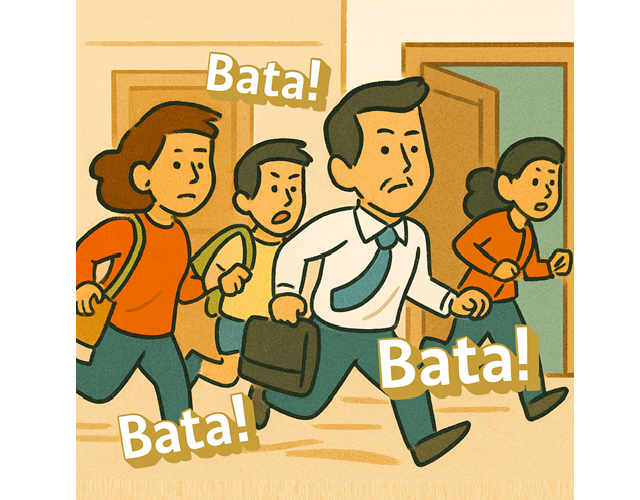
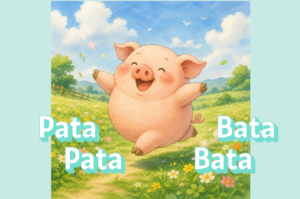
“Bata Bata” (ばたばた)
It captures both the physical sound of flapping and the feeling of rushing around.
Let’s feel how it sounds.
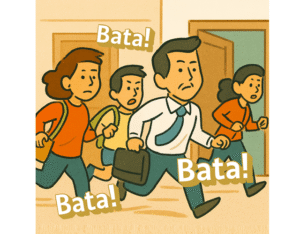
What Is Japanese Onomatopoeia “Bata Bata (ばたばた)” ?
“Bata Bata” describes:
Flapping Sounds
- Cloth in the wind
- Flags waving
- Wings beating
Rushed or Hectic Movement
- People moving quickly
- Preparing in a hurry
- Running back and forth
Chaotic Activity
- Noisy footsteps
- Sudden busy scenes
- Clattering movement
It feels:
- Fast
- Noisy
- A bit chaotic
Unlike calm movement words,
“bata bata” has urgency.
Pronunciation
bah-tah bah-tah
(Say it quickly and with a bouncy rhythm — like footsteps!)
Categories
Sound / Motion
Examples in Daily Life
To learn about how it appears in manga or daily conversation, dive into the following page:
Examples






Comments