
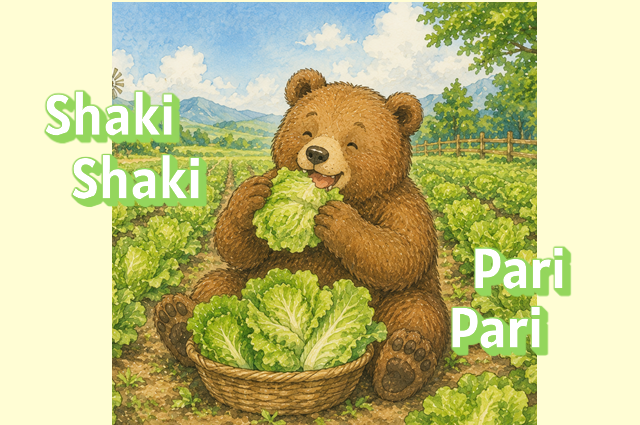
Have you ever bitten into a fresh lettuce leaf and heard a satisfying crunch?
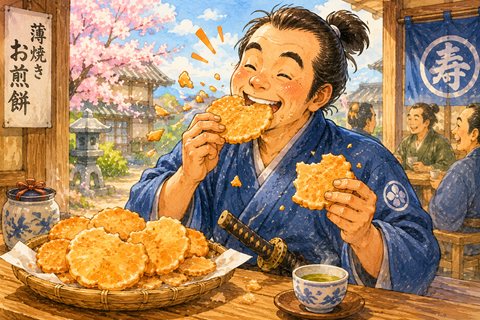
Or snapped a crispy rice cracker and enjoyed the sharp crackling sound?
In Japanese, these two crunchy textures are often described with:
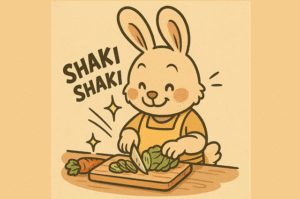
Shaki Shaki (しゃきしゃき)
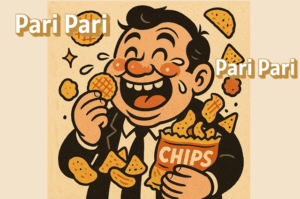
Pari Pari (ぱりぱり)
Both describe crunchy textures, but one comes from freshness while the other comes from dry crispiness.
Differences Between “Shaki Shaki” and “Pari Pari”
| Expression | Meaning | Nuance |
|---|---|---|
| Shaki Shaki (しゃきしゃき) | Fresh crunchy texture | Moist, crisp, refreshing |
| Pari Pari (ぱりぱり) | Dry crispy texture | Thin, brittle, crackly |
In short:
- Shaki shaki → crunchy because it’s fresh
- Pari pari → crunchy because it’s dry and crispy
Examples in Daily Life
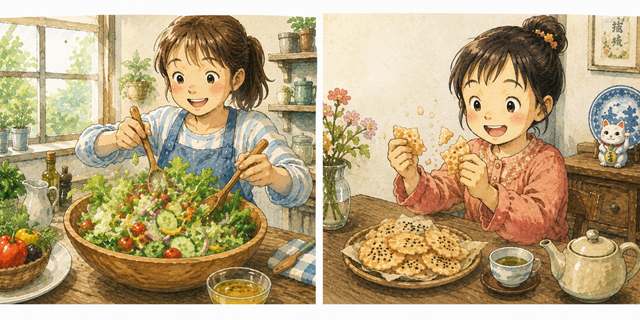
Example 1: Fresh lettuce (Shaki Shaki)
The salad was freshly prepared with crisp vegetables —
shaki shaki…
Example 2: Crispy rice cracker (Pari Pari)
She broke the thin rice cracker into pieces —
pari pari!
Try Using Them!
Fresh vegetables with a crisp bite?
→ Say shaki shaki
Rice crackers, seaweed, or thin crispy food?
→ Say pari pari
Both are crunchy.
But shaki shaki comes from freshness and moisture, while pari pari comes from dryness and crispness.
Two crunchy sounds — but two very different kinds of crunch!



Comments