
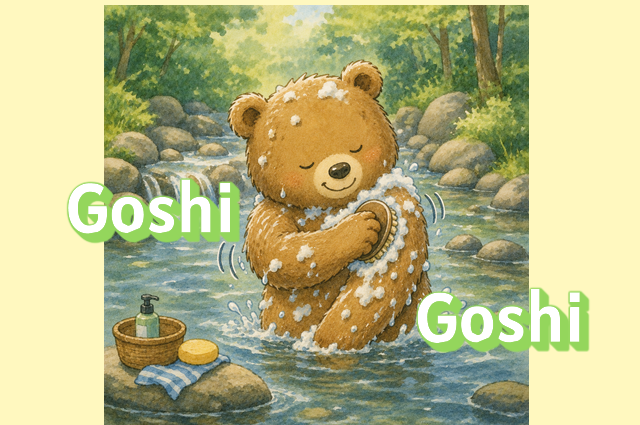
Have you ever scrubbed a dirty pan until it became shiny again?
Or rubbed your hands together while washing them carefully?
That strong, repeated scrubbing motion in Japanese is expressed as:
“Goshi Goshi” (ごしごし)
Let’s hear how it sounds!

What is “Goshi Goshi” (ごしごし)?
“Goshi Goshi” describes:
- Scrubbing something firmly
- Rubbing repeatedly to remove dirt
- Using effort to clean a surface
It often suggests strong, repeated rubbing with a clear purpose: making something clean.
Pronunciation
goh-shee goh-shee
(Say it with a steady, energetic rhythm.)
Category
Motion
What Does “Goshi Goshi” Look Like?
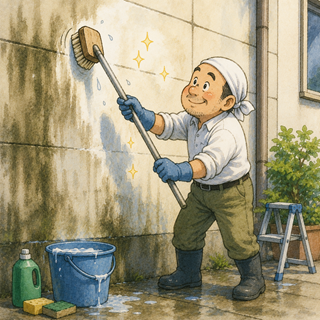
It looks like someone scrubbing a frying pan with a sponge.
Hands rubbing together under running water.
A brush working hard to remove stubborn dirt.

How Do You Say It?
Say it with energy:
Goshi goshi…
Like you’re determined to make something perfectly clean.
Example in Daily Life
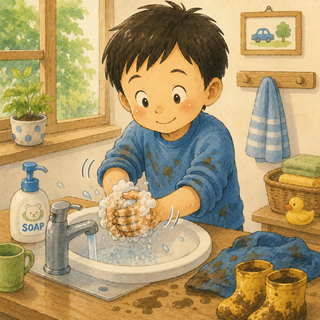
Example: Washing muddy hands
After playing outside, he scrubbed his muddy hands with soap —
goshi goshi…
Soon they were clean again.
Cultural Note
In English, you might say:
- “Scrub”
- “Rub hard”
- “Scrub clean”
But “goshi goshi” emphasizes the repeated motion as much as the cleaning itself.
It’s commonly used when washing hands, cleaning dishes, brushing floors, or removing stubborn dirt.
It suggests:
Firm rubbing
Repeated effort
Cleaning with purpose
Compared with similar expressions:
- Shaka Shaka → shaking or mixing lightly
- Goshi Goshi → scrubbing firmly
- Gari Gari → scraping with force
Watch & Feel the “Goshi Goshi” World!
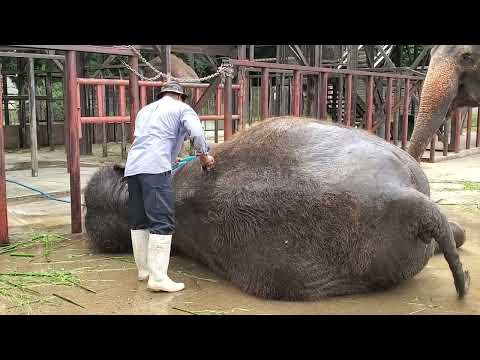
Feel the “Goshi Goshi” — Scrubbing an Elephant
Try Using It!
When you’re scrubbing away stubborn dirt…
When you rub something firmly again and again…
When a little extra effort makes all the difference…
Say it with determination:
Goshi goshi…
Sometimes a little elbow grease is the secret to a sparkling result.











Comments