
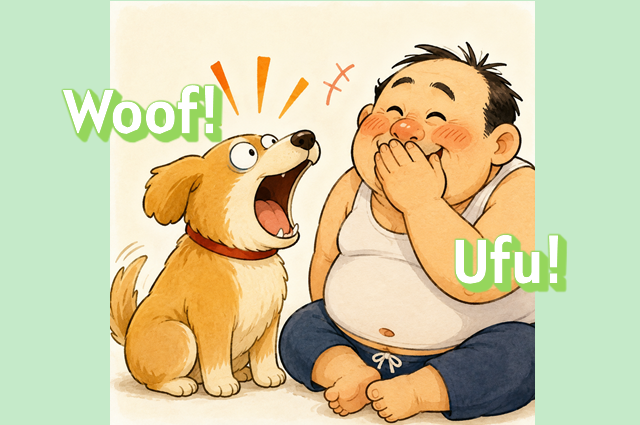
Sometimes, two sounds from completely different languages happen to sound strangely alike.
Take the English “woof!” and the Japanese “うふ (ufu).”
Both are onomatopoeia.
Both sound a little alike.
But they mean completely different things.
One is the sound of a dog barking.
The other is a soft little laugh.
They have absolutely nothing to do with each other.
And yet…
woof 🐶
ufu 🤭
Don’t they sound just a tiny bit alike?
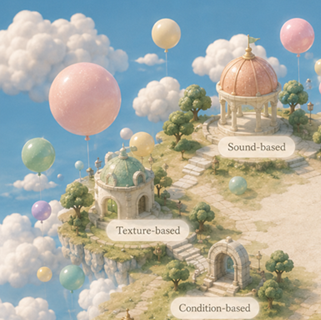
Woof! — A Dog’s Bark in English
In English, woof is one of the most familiar ways to represent the sound of a dog barking.
The dog suddenly went woof!
It is usually pronounced something like /wʊf/.
Depending on the dog — and the person imitating it — English also has expressions such as bow-wow, ruff, and arf.
But woof has that short, rounded sound:
woof! 🐶
Now listen to a completely unrelated Japanese sound.
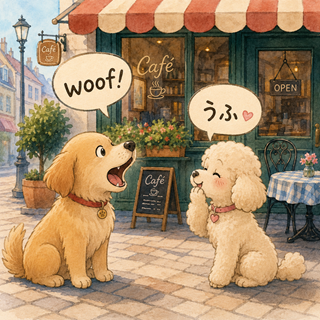
Ufu — A Little Japanese Laugh
うふ (ufu) represents a small, soft laugh.
It can sound amused, pleased, playful, or sometimes a little mischievous.
Someone might cover their mouth and quietly laugh:
うふ 🤭
It is not the Japanese equivalent of woof, of course. It is not even an animal sound.
But when you put the two side by side—
woof
ufu
—there is a funny little resemblance.
They are not pronounced exactly the same. English woof begins with a w sound and ends firmly in f, while Japanese うふ has two Japanese u vowels.
Still, to the ear, they can occasionally feel like distant little sound cousins.

Just a Coincidence — and That’s the Fun
There is no special linguistic relationship between woof and うふ.
Their meanings are completely different, their histories are unrelated, and speakers of English and Japanese do not normally associate the two.
They simply happen to sound a little alike.
But coincidences like this are part of the fun of listening to languages.
Sometimes a familiar sound in one language unexpectedly reminds you of something completely different in another.
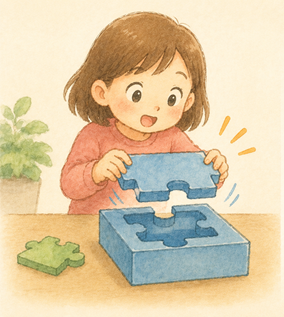
A dog says:
woof! 🐶
Someone nearby giggles:
うふ 🤭
Different worlds.
Almost the same little sound.
And sometimes, noticing that is enough to make language interesting.
What About Your Language?
Does your language have an onomatopoeia that sounds surprisingly similar to a Japanese one — but means something completely different?
Maybe it is a sound, a little laugh, a movement, or even a feeling.
Listen closely. You might find an unexpected sound twin hiding in your own language.
If you find one, let us know!







Comments