
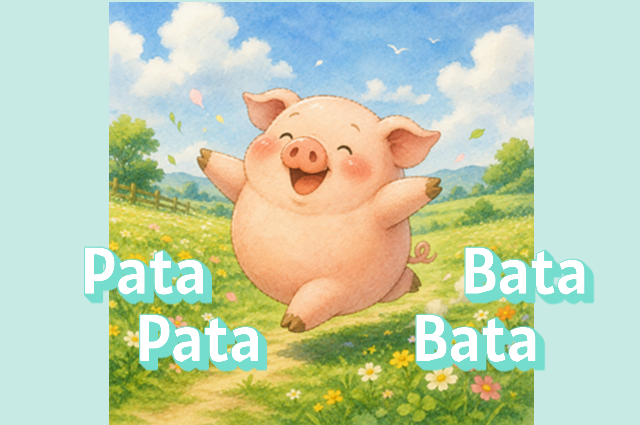
Have you ever heard the light little footsteps of a child running toward you?
Or heard someone rushing toward you with much heavier, noisier steps?
In Japanese, these two kinds of running sounds can be expressed as:
Pata Pata (ぱたぱた)

Bata Bata (ばたばた)
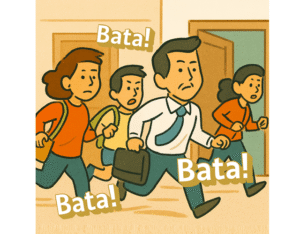
They can both describe repeated footsteps or hurried movement, but the weight, loudness, and energy of the movement feel quite different.

Differences Between “Pata Pata” and “Bata Bata”
| Expression | Meaning | Nuance |
|---|---|---|
| Pata Pata (ぱたぱた) | Light, quick repeated footsteps | Small, light, lively |
| Bata Bata (ばたばた) | Heavy, noisy repeated footsteps or movement | Loud, hurried, energetic |
In short:
- Pata pata → light, quick little footsteps
- Bata bata → heavier, louder, more hurried footsteps
Examples in Daily Life
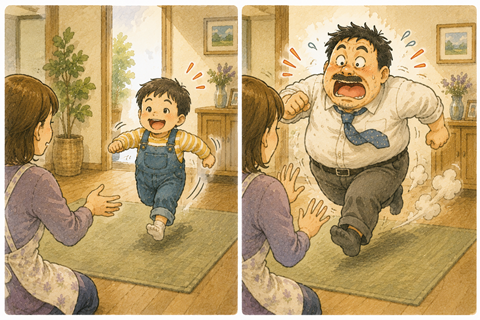
Example 1: A child running across the room (Pata Pata)
The little boy spotted his mother and happily ran across the room toward her,
his small feet making light, quick steps —
pata pata…
Example 2: A big man rushing across the room (Bata Bata)
The big man suddenly rushed across the room toward her,
his heavy footsteps filling the room with noise —
bata bata!
Try Using Them!
A child or someone small running with light, quick footsteps?
→ Say pata pata
Someone rushing around with heavier, louder footsteps?
→ Say bata bata
Both can describe quick repeated movement —
but pata pata feels light and small, while bata bata feels heavier and noisier!












Comments