
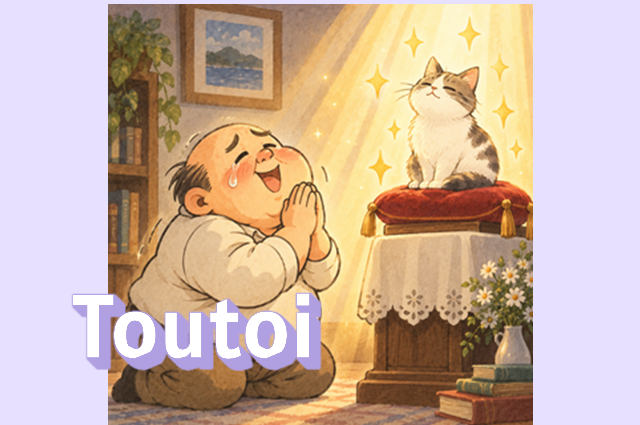
You see your favorite character smiling.
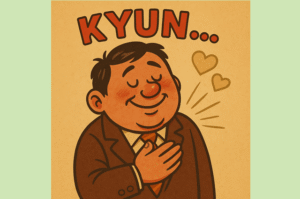
Kyun…
Two people you love share a small, tender moment.
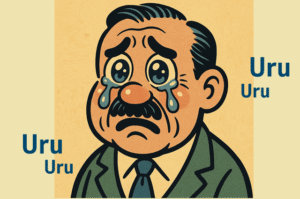
Uru Uru…
A tiny animal looks so adorable that you want to squeeze it in your arms.
Gyu!
And somehow, one Japanese word seems to capture all of these feelings:
Toutoi… (とうとい / 尊い)
The dictionary may translate toutoi as “precious,” “noble,” or “worthy of respect.”
But in modern casual Japanese, toutoi can mean something much more emotional.
So what does toutoi really feel like?
From Respect to an Overwhelming Feeling of Love
Traditionally, toutoi (尊い) has been used for something highly valued, noble, sacred, or worthy of respect.
That meaning still exists.
But today, especially in casual conversation, fandom, and online culture, you may hear people say things like:
“Toutoi…”

when they see:
- a favorite character looking adorable
- a touching moment between two beloved characters
- an idol doing something unexpectedly sweet
- a heartwarming interaction
- an animal that is almost unbearably cute
Here, toutoi does not simply mean “valuable” or “worthy of respect.”
It expresses a feeling that something is so precious, lovable, beautiful, or emotionally moving that ordinary words almost seem insufficient.
Sometimes, all you can say is:
“Toutoi…”

The Onomatopoeic Feelings Hidden Inside Toutoi (とうとい)
Toutoi is not an onomatopoeia.
But the modern emotional meaning of the word becomes easier to understand when we look at the feelings hidden inside it.
Kyun (きゅん)
Your heart tightens for a moment because something is simply too lovable.
It is the little emotional squeeze you feel when you see someone or something you adore.
Uru Uru (うるうる)
Your eyes begin to fill with tears.
You are not necessarily sad.
You may simply be so touched by what you are seeing that you feel like crying.
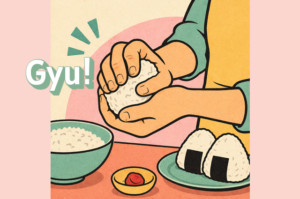
Gyu! (ぎゅっ)
You want to pull something close and hug it tightly.
In this case, gyu! represents that almost irresistible feeling of wanting to embrace something because it feels so precious and lovable.
Jiin… (じーん)
A warm feeling quietly spreads through your heart.
Unlike the sudden kyun, jiin is a deeper, slower emotional response — the feeling of being genuinely moved.

These expressions are not definitions of toutoi.
But together, they reveal the emotional world that the modern word can contain.
Kyun…
Uru uru…
Gyu!
Jiin…
Toutoi.
Why Is “Precious” Not Quite Enough?
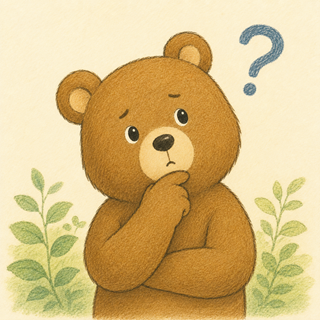
English words such as precious, adorable, beautiful, heartwarming, or even I love this may work depending on the situation.
But none of them always captures the entire feeling of modern toutoi.
Imagine seeing two characters you love quietly smiling at each other.
You might think:
“They’re adorable.”
But perhaps that feels too simple.
You are happy.
You are moved.
Your heart hurts a little because the moment is so sweet.
You might even feel like crying.
And somehow you want to hug the entire scene.
That complicated emotional mixture is where toutoi becomes useful.
Rather than describing one specific emotion, the word can hold several feelings at once.
How Did “Toutoi” Change?

The older meaning of toutoi has not disappeared.
The word can still describe something worthy of great respect or something considered extremely valuable.
What has changed is the range of situations in which people use it.
In modern popular culture and everyday online language, the sense of “something so precious that it deserves special reverence” has expanded into a playful but often genuine expression of intense affection and emotional appreciation.
That is why a word once strongly associated with value and reverence can now appear beneath a picture of a favorite character, an idol, a fictional couple, or even an adorable animal.
The feeling is different.
But perhaps a small part of the original idea remains:
This is so precious to me that ordinary appreciation does not feel like enough.
What Does Modern “Toutoi” Tell Us About Japanese?
Modern toutoi is interesting because its meaning becomes much easier to understand through feelings than through a direct translation.
You could translate it differently every time:
precious.
adorable.
heartwarming.
I can’t handle how cute this is.
I love them so much.
But Japanese can simply say:
Toutoi…
And the listener may understand the emotional world surrounding it.
Kyun.
Uru uru.
Gyu!
Jiin.
Perhaps this is one reason onomatopoeia can be so useful when exploring Japanese.
Sometimes a dictionary tells us what a word means.
Onomatopoeia can help us understand what that word feels like.
Final Thought

Traditionally, toutoi meant something precious, noble, or worthy of respect.
Those meanings are still part of Japanese today.
But modern toutoi has also become a wonderfully emotional word.
You see something you deeply adore.
Kyun…
You are unexpectedly moved.
Uru uru…
You want to hug it tightly.
Gyu!
The feeling stays with you.
Jiin…
And finally:
“Ah… toutoi.”
Sometimes “precious” is the translation.
But sometimes, toutoi is not really one feeling at all.
It is a whole bundle of feelings squeezed into one small Japanese word.







Comments