
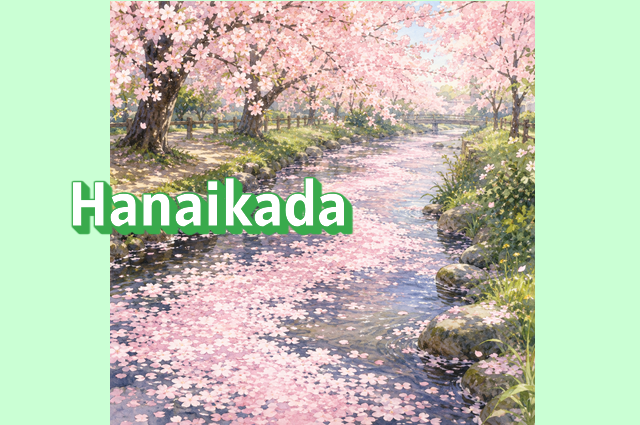
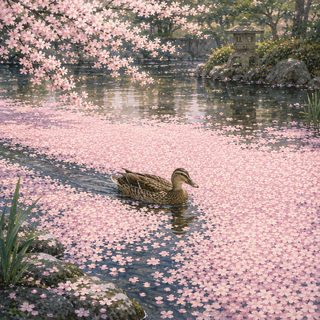
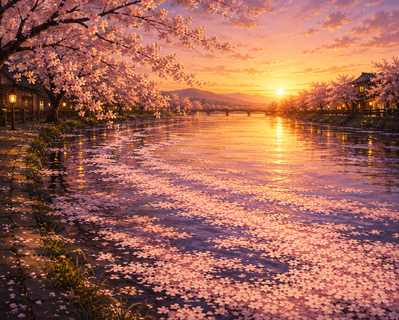
Cherry blossom petals drifting together on the surface of a river.
That is one way to describe hanaikada (はないかだ / 花筏).
But that definition alone does not fully explain the word.
Cherry blossoms fall in many places around the world.
Rivers flow everywhere.
So why did Japanese people think this beautiful moment was important enough to give it a name?
A Word That Means More Than Its Definition
The word hanaikada is made up of:
- hana (はな / 花) — flower
- ikada (いかだ / 筏) — raft
Literally, it means “a raft of flowers.”
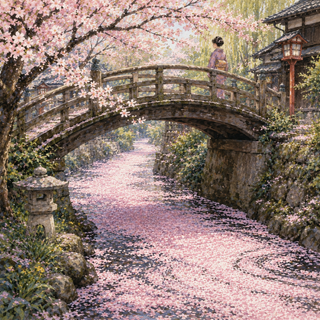
The word describes countless cherry blossom petals floating together on the surface of a river, looking like a small raft carried by the current.
Yet when Japanese people hear the word hanaikada, they imagine much more than petals on water.
They often imagine:
- a quiet riverside
- the gentle flow of spring water
- the peaceful end of cherry blossom season
- a moment of calm after the blossoms have fallen
In other words, hanaikada is not simply about petals.
It is about the quiet beauty that remains after the celebration of spring.
The Onomatopoeic Feelings Hidden Inside
Hanaikada is not an onomatopoeia.
Yet it can be understood through onomatpoeic feelings.
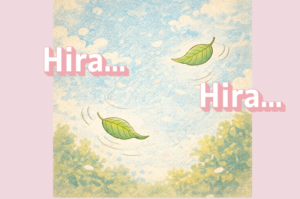
Hira Hira (ひらひら)
The last petals drift softly through the air.
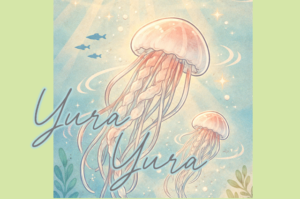
Yura Yura (ゆらゆら)
The petals float gently with the current.
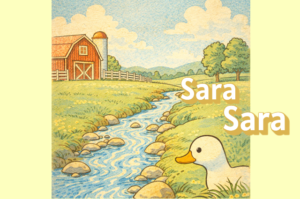
Sara Sara (さらさら)
The river flows quietly beneath them.
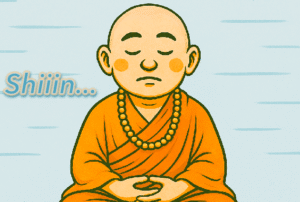
Shiiin… (しーん)
The riverside feels peaceful and still.
Yuttari (ゆったり)
Time seems to slow down as the petals continue their quiet journey.

Bonyari (ぼんやり)
You find yourself simply watching the water without thinking about anything else.

Uto Uto (うとうと)
The gentle warmth and peaceful atmosphere make the moment feel almost dreamlike.

These words are not part of hanaikada itself.
But together they help create the feelings that the word often evokes.
Why Did Japanese People Give This Moment a Name?
Cherry blossoms bloom for only a short time.
Then they fall.
Most people might think the story ends there.
Japanese people noticed something more.
Even after the blossoms had fallen, they found beauty in the petals continuing their journey down the river.
The interesting question is not:
“What is hanaikada?”
The interesting question is:
“Why did Japanese people think even this quiet moment was worth giving a name?”
Perhaps it reflects an appreciation for beauty that continues even after its brightest moment has passed.
There is no single answer.
But the existence of the word itself tells us that even the ending of spring was worth noticing.
What Does Hanaikada Tell Us About Japan?
Many Japanese words celebrate moments that are easy to overlook.
Not dramatic moments.
Quiet ones.
Words such as:
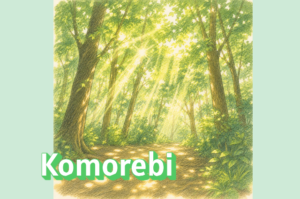
- komorebi (sunlight filtering through leaves)
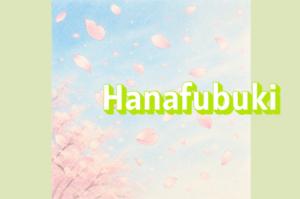
- hanafubuki (a storm of cherry blossom petals)
- hanaikada (a raft of cherry blossom petals)
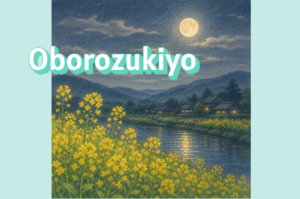
- oborozukiyo (a hazy moonlit night)
- yuunagi (the evening calm)
These words do more than describe nature.
They invite us to slow down and notice what remains after the excitement has passed.
In that sense, hanaikada is more than petals floating on a river.
It is a small window into how Japanese people find beauty in quiet endings.
Final Thought
Hanaikada means cherry blossom petals floating together on a river.
But that is only the beginning.
The real meaning may be found in the feelings hidden inside the scene:
hira hira…
yura yura…
sara sara…
shiiin…
yuttari…
bonyari…
uto uto…
Perhaps that is why Japanese people thought this gentle moment was important enough to give it a name.




Comments