
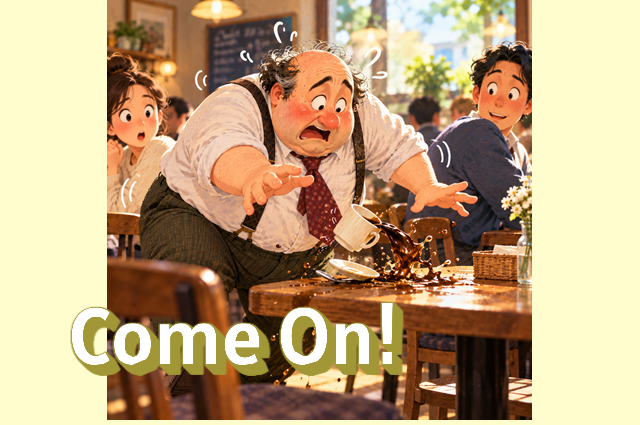
In English, we react to something surprising, silly, or hard to believe with expressions like:
- Seriously?
- Come on!
- Oh, come on!
- You’ve got to be kidding!
It’s that moment when someone does something so unexpected or silly that you can’t help reacting.
Maybe your friend forgot their wallet again, made an obvious mistake, or said something that makes you shake your head and smile.
You’re surprised—but you’re not really angry.
But how does Japanese express this playful mix of surprise and disbelief?
Let’s discover a very Japanese reaction that can turn a complaint into friendly teasing.
What Is a “Seriously?” or “Come On!” Moment?

It’s when:
- Your friend realizes they forgot their wallet
- Someone makes a silly mistake right in front of you
- You hear something unexpected and think, “Seriously?”
- You want to complain, but you’re also amused
In English, we might say:
- Seriously? – Showing disbelief at what someone just did or said
- Come on! – Reacting to something annoying, silly, or unbelievable
- Oh, come on! – A slightly more expressive reaction of disbelief or complaint
- You’ve got to be kidding! – Showing stronger surprise or disbelief
Japanese can capture this playful mix of surprise, disbelief, and gentle complaint with one short expression.
How Is This Feeling Expressed in Japanese?
Japanese has many short expressions that turn spontaneous human reactions into vivid, memorable sounds.
The standout expression for playful surprise and disbelief is:
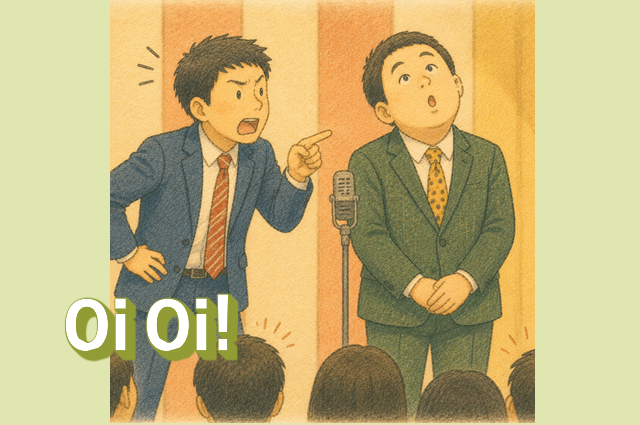
“Oi Oi” (おいおい)
It expresses mild surprise, playful disbelief, or a gentle complaint—often without real anger.
Let’s hear how it sounds.
Japanese speakers often say “oi oi” when a friend does something silly, makes an unexpected mistake, or says something hard to believe. Depending on the tone, it can feel like “Seriously?” or “Come on!” in English, often softening the reaction with humor rather than turning it into real criticism.
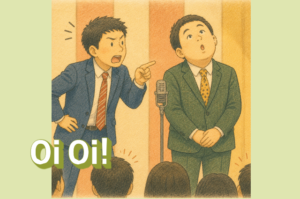
What Is Japanese Onomatopoeia “Oi Oi (おいおい)”?
“Oi Oi” is used to express:
- Mild surprise
- Playful disbelief
- A gentle complaint or teasing reaction
It’s often used with a smile rather than real anger.
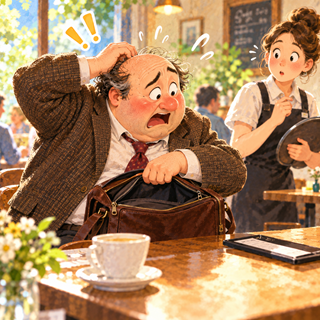
Pronunciation
oh-ee oh-ee…
(Say it like you’re shaking your head in amusement.)
Categories
Emotion
Related Emoji
🤦
😅
Related Japanese Kaomoji
( ̄▽ ̄;)
(^_^;)
Related Western Smiley
XD
😛
Examples in Daily Life
To see how Japanese people naturally use Oi Oi when reacting with surprise, disbelief, or playful teasing, explore the page below.
Example







Comments