
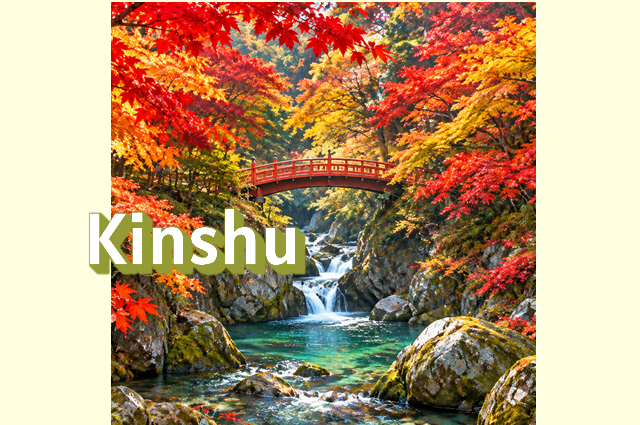
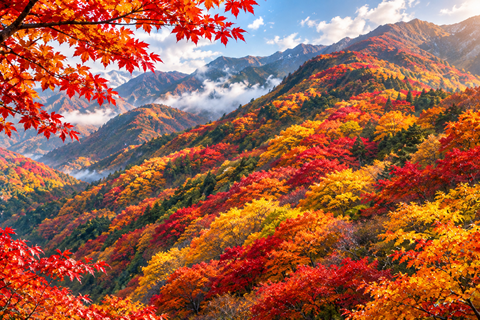
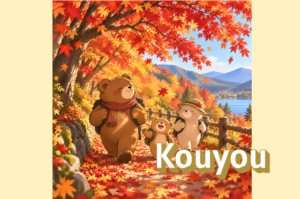
Imagine a mountainside covered in brilliant shades of red, orange, and gold.
Sunlight catches the leaves, making the entire landscape glow. A gentle breeze passes through, sending a few colorful leaves dancing into the air.
In Japanese, kinshu (きんしゅう / 錦秋) describes the magnificent beauty of autumn foliage.
The word combines nishiki (にしき / 錦), meaning “brocade,” a richly patterned fabric, and aki (あき / 秋), meaning “autumn.”
It’s as if nature has woven an enormous tapestry of autumn colors.
But what does this beautiful autumn scene actually look and feel like?
Let’s explore kinshu through three Japanese onomatopoeic expressions.
Three Onomatopoeic Feelings of Kinshu
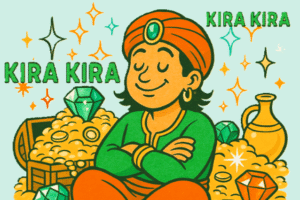
Kira Kira (きらきら) — Sparkling in the Sunlight
Imagine sunlight filtering through colorful autumn leaves.
The leaves catch the light, and tiny flashes of brilliance seem to appear everywhere.
Kira Kira!
This expression captures the sparkling, shimmering quality of light.
This is the radiant side of kinshu.
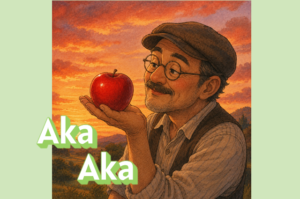
Aka Aka (赤々) — Glowing Brilliant Red
Now imagine maple trees covered in vivid crimson leaves.
Their colors are so intense that the entire hillside seems to glow red.
Aka Aka!
This expression describes something that appears vividly or brilliantly red.
This is the rich, colorful side of kinshu.
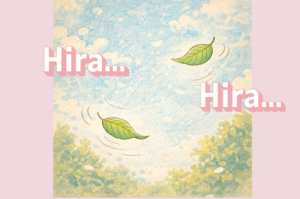
Hira Hira (ひらひら) — Fluttering Through the Air
A gentle breeze blows through the trees.
A few red and golden leaves detach from their branches and float gracefully toward the ground.
Hira Hira!
This expression captures the light, fluttering movement of thin, delicate things.
This is the graceful, moving side of kinshu.
Autumn as a Living Tapestry
Kira Kira brings out the sparkle of sunlight. Aka Aka captures the intensity of autumn reds. And Hira Hira adds the gentle movement of falling leaves.
Together, these expressions transform kinshu from a beautiful word into a scene you can almost see unfolding before your eyes.
A landscape woven from light, color, and movement.
That is the world of kinshu.



Comments