
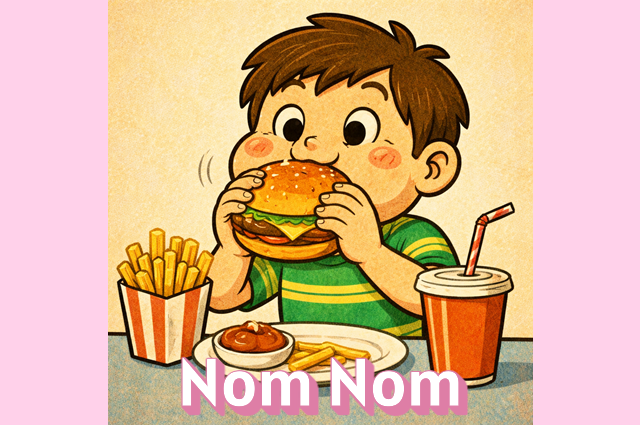
In English-language anime and manga, eating scenes are often described with sounds like “Chew”, “Munch”, or even playful phrases like “Nom nom.”
These are the moments when a character quietly munches on something —
maybe with puffed-up cheeks, slow steady chewing, and total focus on the food.
But how is this kind of adorable, rhythmic eating captured in Japanese?
Let’s step into the world of anime and manga and discover how Japanese onomatopoeia makes eating sound irresistibly cute.

What Is a “Chewing” Moment?
It’s the scene where someone is enjoying their food bite by bite —
not rushing, not slurping — just calmly and steadily chewing.
In anime and manga, this happens when:
- a child eats rice balls with puffed cheeks
- a bear munches on honey under a tree
- a quiet character enjoys snacks while listening
- someone eats with such focus, it’s kind of adorable
In English, these moments are described as:
- Chew / Munch – The basic act of chewing food
- Nom Nom – A playful or childlike way to say “eating”
- Nibble – Taking small bites
- Chomp Chomp – Bigger, cartoonish bites (but less calm than mogu mogu!)
So what’s the Japanese sound for calm, rhythmic chewing?

How Is This Feeling Expressed in Japanese?
In Japanese, eating has its own set of sounds —
from slurps to gulps to adorable munches.
The perfect word for the cute, steady act of chewing is:
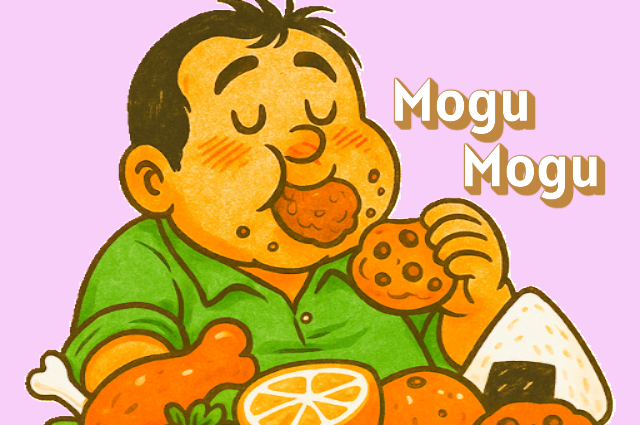
“Mogu Mogu” (もぐもぐ)
It’s the sound of chewing slowly with full cheeks —
often used with children, animals, or anyone who eats in a soft, endearing way.
Let’s hear how it sounds.

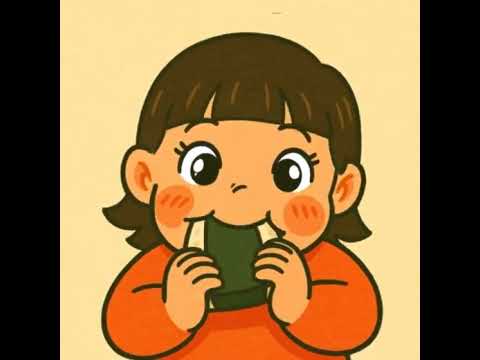
What Is Japanese Onomatopoeia “Mogu Mogu” (もぐもぐ) ?
“Mogu Mogu” is a Japanese onomatopoeia that expresses the action and rhythm of chewing something repeatedly with a full mouth.
It’s not about speed or sloppiness —
it’s about rhythm, round cheeks, and focused munching.
This word is especially common in cute scenes, and sometimes even becomes a character trait — someone who’s always “mogu mogu”ing through life.
Used in:
- Kids or animals calmly chewing their food
- Bento box scenes
- Characters who love to snack
- Situations where the act of eating itself is meant to be adorable

Pronunciation
moh-goo moh-goo
Categories
Sound / Motion
Examples in Daily Life
To learn about how it appears in manga or daily conversation, dive into the following page:
Examples









Comments