
Meet the Gentle, Rhythmic “Poppo” of the Japanese Dove!
You might know the sound of a pigeon as “coo” in English.
In French, it’s “roucoule.”
In Italian, “gru gru.”
But in Japanese, the soft and rhythmic sound of a pigeon is often written as —
Poppo! (ぽっぽ!)
It’s calm, steady, and nostalgic — often heard in parks, temples, or early morning city streets.
You’ll find it in children’s songs, haiku, and old townscapes — carrying a slow, peaceful rhythm.
Let’s hear what it sounds like!
What is “Poppo” (ぽっぽ)?
“Poppo” is the Japanese onomatopoeia for the cooing sound of a pigeon.
It gently mimics the soft, rhythmic call that doves and pigeons make — especially when they are perched or walking slowly.
It’s often associated with:
- A calm morning scene
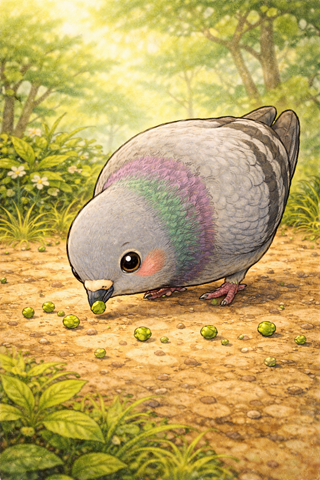
- Pigeons gathering for food in temples
- Classic nursery songs like “はとぽっぽ”
- Peaceful, nostalgic feelings
Pronunciation
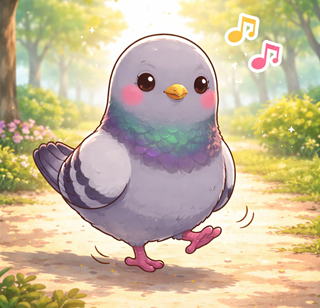
po-po
(Say it slowly and rhythmically, like a pigeon nodding with each sound: poppo… poppo…)
Categories
Animals / Sound
What Does “Poppo” Look Like?
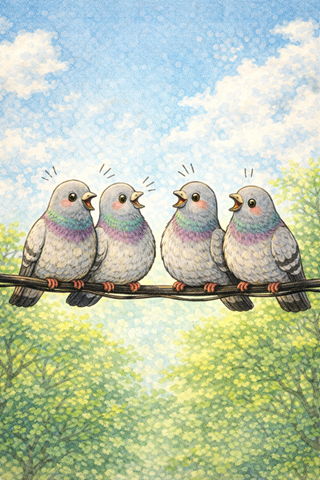
In manga or picture books, “poppo” is often written beside plump pigeons sitting on fences, rooftops, or telephone wires.
The font is usually soft, rounded, and repeated to give a sense of rhythm:
Poppo… poppo…

Examples in Daily Life
Example 1: Pigeons on the branch
Under the large trees, a group of pigeons waddled around,
cooing gently —
Poppo… poppo…
Watch & Feel the “Poppo” World!
The sound of “Poppo”
Try Using It!
Next time you hear a pigeon, or draw a quiet city scene with birds,
try whispering:
Poppo…
And feel the nostalgic rhythm of Japan’s feathered friends.










Comments