
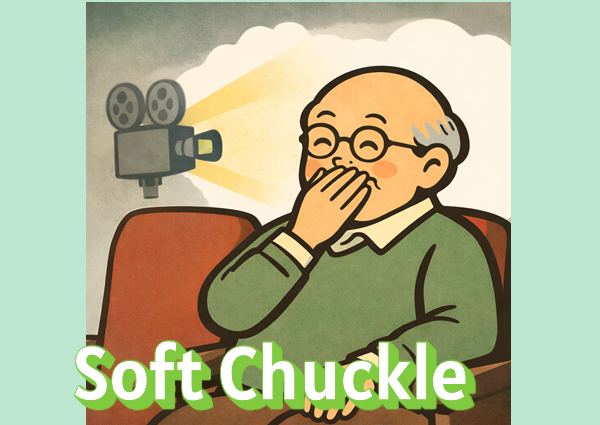
In English-language anime and manga, quiet laughter is often described with words like “Chuckle”, “Heh”, or even “Giggle to Yourself.”
These are the moments when a character isn’t laughing out loud —
but just enough to show they noticed something amusing… or that they’re secretly enjoying a situation.
But how is this subtle, inner laughter expressed in the original Japanese?
Let’s step into the world of anime and manga and discover how Japanese onomatopoeia captures even the quietest smiles.

What Is a “Soft Chuckle” Moment?
It’s that little laugh —
the one that escapes when something tickles your thoughts,
or when you don’t want others to notice you’re amused.
In anime and manga, this happens when:
- a character finds something funny but doesn’t say it
- someone enjoys a clever moment all to themselves
- a joke is slightly awkward, and someone smiles instead of bursting out
- there’s a shy or teasing vibe in the air
In English, these moments are often described as:
- Chuckle – A quiet, private laugh
- Giggle – A light laugh, usually with joy or mischief
- Snicker – A secretive or slightly mocking laugh
- Heh / Pfft – Small, restrained laugh sounds in dialogue
So how does Japanese give this soft laugh a sound?

How Is This Feeling Expressed in Japanese?
Japanese onomatopoeia doesn’t just cover loud sounds —
it even gives voice to subtle emotions, like a laugh held just below the surface.
The perfect word for a quiet, inner laugh is:
“Kusu” (くすっ)
It’s the sound of a tiny smile escaping —
gentle, hidden, and often full of warmth or irony.
Let’s hear how it sounds.

What Is Japanese Onomatopoeia “Kusu” (くすっ) ?
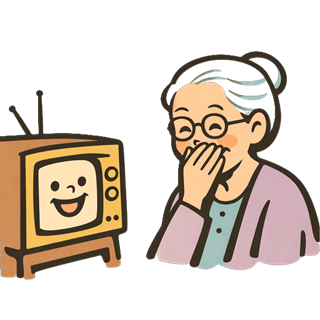
“Kusu” is a Japanese onomatopoeia that expresses a soft laugh — the sound of holding back a smile or laughing to yourself.
It’s used when someone is quietly amused,
or when a moment feels lightly funny — not enough for loud laughter,
but just enough to bring a smile to your lips.
Used in:
- Quiet, private laughter
- Characters teasing or enjoying something quietly
- Slightly awkward or subtly funny moments
- Hidden amusement or smug satisfaction
Pronunciation
kus’ (くすっ)
(Say it like a breath through the nose — short, gentle, and soft.)
Category
Sound
Examples in Daily Life
To learn about how it appears in manga or daily conversation, dive into the following page:
Examples










Comments