
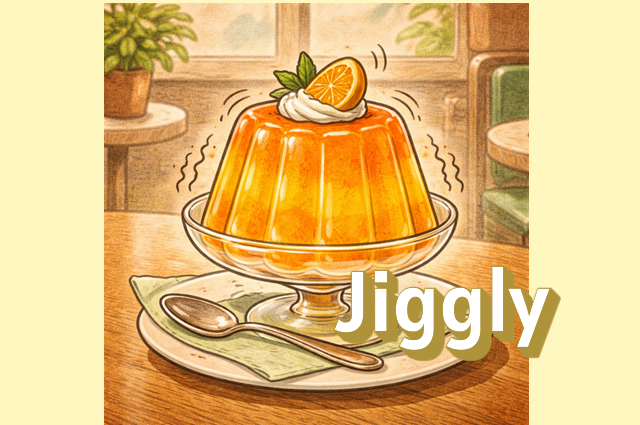
In English, we describe gentle shaking or wobbling as:
- Wobbly
- Jiggly
- Quivering
- Trembling
Sometimes it’s food — like jelly or pudding wobbling softly.
Sometimes it’s the body — like hands trembling slightly when you’re nervous.
But how does Japanese capture that soft, delicate shaking with a repeating rhythm?
Let’s step into the world of Japanese onomatopoeia and discover the sound of gentle wobbling.
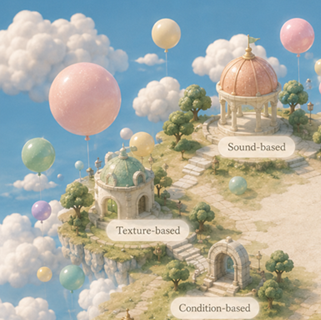
What Is a “Soft Wobble” Moment?
It’s when:
- Jelly wiggles on a spoon
- Pudding trembles when you move the plate
- Someone’s hands shake a little from nerves
- Something soft jiggles lightly
In English, we might say:
- Jiggly – Soft and wobbling
- Wobbly – Moving unsteadily
- Quivering – Shaking lightly and repeatedly
- Trembling – Small, quick shaking
But Japanese expresses this gentle movement with a playful sound.

How Is This Feeling Expressed in Japanese?
Japanese often uses repeating sounds to describe small, repeated movements.
The standout word for soft wobbling or trembling is:
“Furu Furu” (ふるふる)
It represents a delicate, light trembling.
Let’s feel how it sounds.
What Is Japanese Onomatopoeia “Furu Furu (ふるふる)” ?
“Furu Furu” describes:
Soft Wobbling Textures
- Jelly
- Pudding
- Soft desserts
- Anything that jiggles lightly
Light Body Trembling
- Hands shaking from nerves
- Slight shivering from emotion
- Small, delicate tremors
Unlike stronger shaking words like “gata!,”
“furu furu” feels soft, light, and cute.
It’s gentle movement — not violent shaking.
Pronunciation
foo-roo foo-roo
(Say it softly and bounce it — like something lightly trembling in your hands.)
Categories
Texture / Motion
Example in Daily Life
To learn about how it appears in manga or daily conversation, dive into the following page:
Example












Comments