
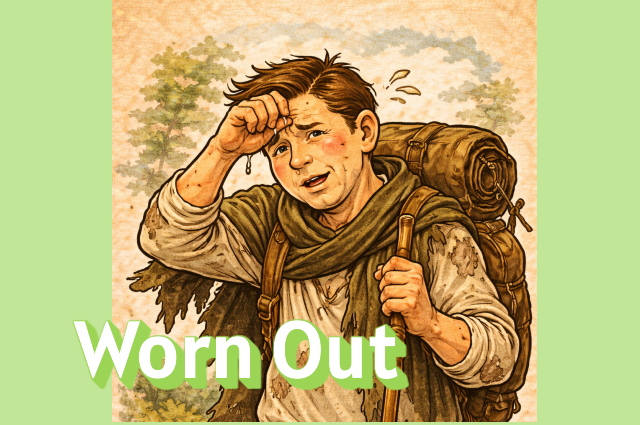
In English, we describe things that are badly worn or falling apart as:
- Falling apart
- In shambles
- Worn out
- Completely broken down
Sometimes it refers to physical objects — like torn clothes or crumbs breaking apart.
Sometimes it refers to people — when someone is exhausted, devastated, or crying uncontrollably.
But how does Japanese capture that sense of collapse or disintegration with a repeating rhythm?
Let’s step into the world of Japanese onomatopoeia and discover the sound of things falling apart.
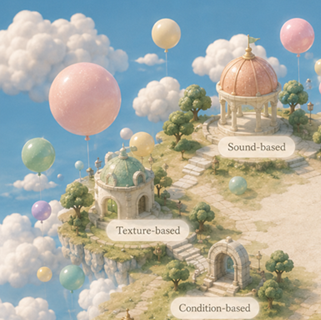
What Is a “Falling Apart” Moment?
It’s when:
- Clothes are old and torn
- Something breaks into small pieces
- Someone is physically exhausted
- Someone cries uncontrollably
In English, we might say:
- Falling apart – Breaking down physically or emotionally
- In pieces – Broken into many parts
- Worn out – Extremely tired or damaged
- A total mess – Completely ruined
But Japanese gives that breakdown its own expressive rhythm.
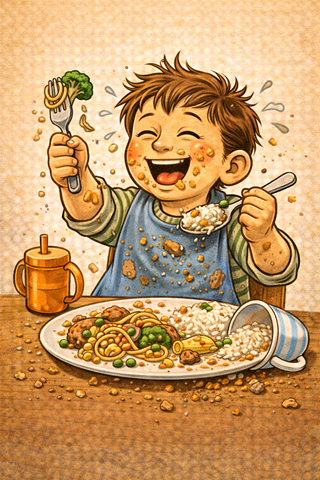
How Is This Feeling Expressed in Japanese?
Japanese often uses repeating sounds to represent conditions that spread or intensify.
The standout word for something worn out or breaking into pieces is:
“Boro Boro” (ぼろぼろ)
It captures the image of things crumbling, tearing, or emotionally collapsing.
Let’s feel how it sounds.
What Is Japanese Onomatopoeia “Boro Boro (ぼろぼろ)” ?
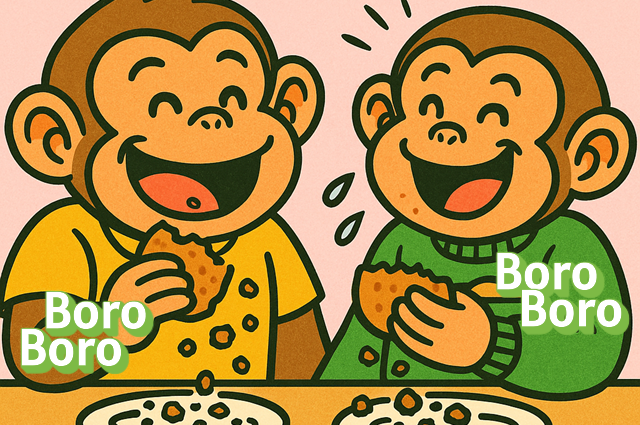
“Boro Boro” describes:
Physical Wear or Damage
- Torn clothes
- Something falling apart
- Crumbling or breaking into bits

Emotional Collapse
- Crying uncontrollably
- Feeling mentally or physically ruined
- Being completely exhausted
It suggests damage that has spread everywhere.
Not just one break —
but many.
Unlike “gusa!” which is a single sharp impact,
“boro boro” is gradual collapse.
Pronunciation
boh-roh boh-roh
Categories
Condition / Texture / Emotion
Examples in Daily Life
To learn about how it appears in manga or daily conversation, dive into the following page:
Examples










Comments