
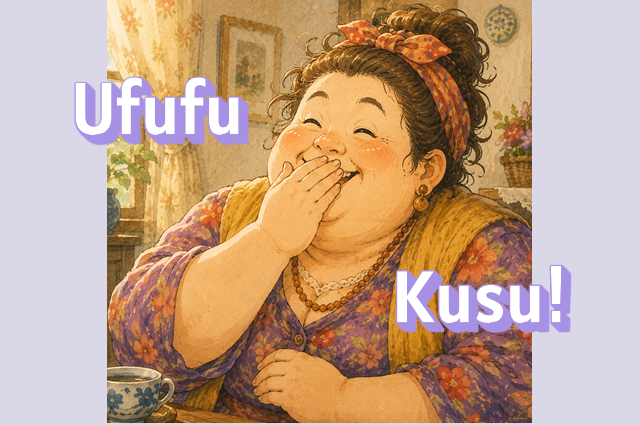
Have you ever smiled quietly because of a pleasant secret?
Or let out a tiny laugh after hearing something unexpectedly funny?
In Japanese, these two small laughs are often expressed as:
Ufufu (うふふ)
あわせて読みたい


What Is “Ufufu”? The Japanese Sound of Soft, Feminine Laughter
Ever heard someone giggle softly to themselves? Or noticed a girl hiding a smile with her hand? That’s when the Japanese onomatopoeia “Ufufu” (うふふ) gently…
Kusu! (くすっ!)
あわせて読みたい

What Is “Kusu”? The Japanese Sound of a Suppressed, Tiny Laugh
Ever heard someone stifle a giggle in a quiet room? Or chuckled quietly at a joke you didn’t want others to hear? That’s when the Japanese onomatopoeia “Kusu…
Both are gentle laughs, but they come from different emotions.
Table of Contents
Differences Between “Ufufu” and “Kusu”

| Expression | Meaning | Nuance |
|---|---|---|
| Ufufu (うふふ) | Warm, pleased giggling | Happy, playful, secretly delighted |
| Kusu! (くすっ!) | A tiny chuckle | Amused, spontaneous, quietly funny |
In short:
- Ufufu → smiling because you’re pleased
- Kusu! → laughing because something is funny
あわせて読みたい

What Does Laughter Sound Like in Japanese? — From Quiet Smiles to Big Laughs
Laughter comes in many forms. Sometimes it’s just a tiny smile you try to hide.Sometimes it’s a soft giggle.And sometimes, it bursts out loud without control…
Examples in Daily Life
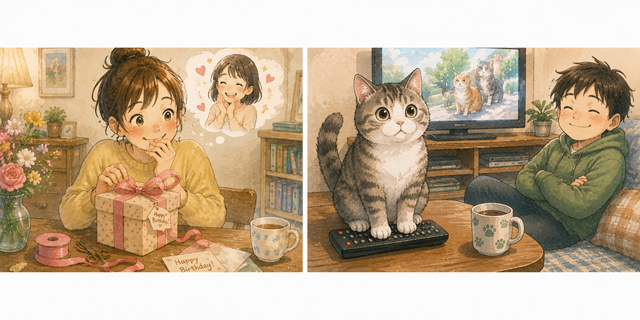
Example 1: Looking forward to a surprise (Ufufu)
She prepared a birthday gift and imagined her friend’s reaction —
ufufu…
Example 2: A funny mistake (Kusu!)
His cat accidentally sat on the TV remote —
kusu!
Try Using Them!
Feeling secretly happy or delighted?
→ Say ufufu
Something makes you laugh softly for a moment?
→ Say kusu!
Both are quiet laughs.
But ufufu comes from happiness and satisfaction, while kusu! comes from amusement.
Two gentle laughs — but two different emotions behind them!
Explore More: Comparison Series









Comments