
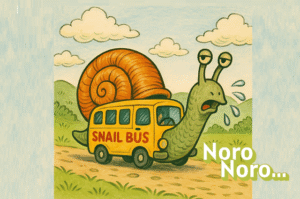
Have you ever been stuck behind a slow-moving snail?
Or spent the whole afternoon lying on the sofa with no motivation to do anything?
In Japanese, these two expressions are often associated with slowness:
Noro Noro (のろのろ)
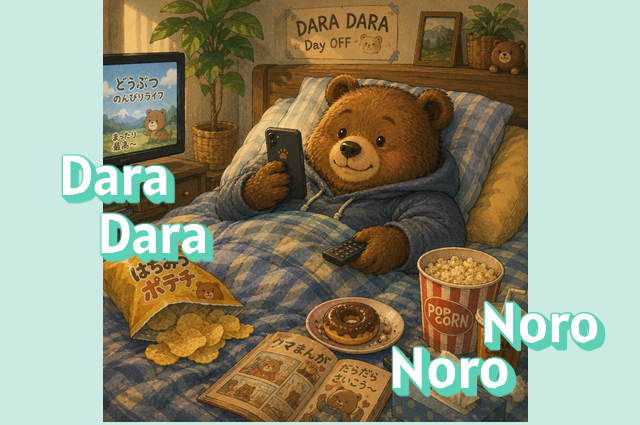
Dara Dara (だらだら)

Both can describe slow movement, but one is about speed, while the other is about attitude.

Differences Between “Noro Noro” and “Dara Dara”

| Expression | Meaning | Nuance |
|---|---|---|
| Noro Noro (のろのろ) | Moving slowly | Low speed, sluggish progress |
| Dara Dara (だらだら) | Lazily dragging on | Lack of motivation, energy, or focus |
In short:
- Noro noro → slow because of speed
- Dara dara → slow because of attitude
Examples in Daily Life

Example 1: Traffic jam (Noro Noro)
The cars moved forward little by little during rush hour —
noro noro…
Example 2: A lazy afternoon (Dara Dara)
He stayed on the sofa all afternoon, scrolling on his phone —
dara dara…
Try Using Them!
A train, car, turtle, or snail is moving slowly?
→ Say noro noro
Someone is wasting time without energy or purpose?
→ Say dara dara
Noro noro can be used for people, animals, vehicles, and even machines.
Dara dara is mostly used for people and human behavior.
A snail can move noro noro.
But a snail cannot move dara dara, because a snail has no lazy attitude!
Two kinds of slowness — but two completely different reasons behind them.












Comments