
Have you ever snapped the last puzzle piece into place?
Then admired how perfectly everything fit together?
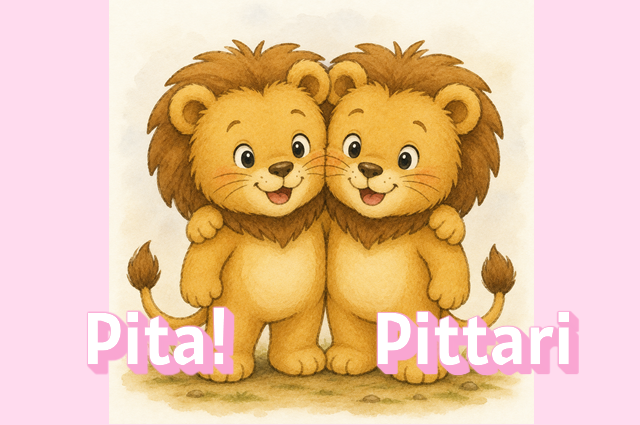
Japanese uses two closely related expressions for these moments:
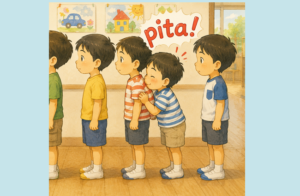
Pita! (ぴたっ!)
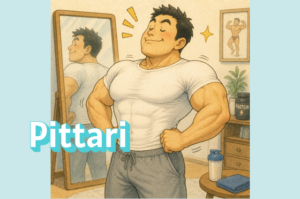
Pittari (ぴったり)
Both describe a perfect fit, but one captures the exact moment, while the other describes the finished result.
Differences Between “Pita!” and “Pittari”
| Expression | Focus | Nuance |
|---|---|---|
| Pita! | The moment of fitting | A quick, satisfying click into place |
| Pittari | The finished state | A perfect match that feels naturally right |
In short:
- Pita! → the instant something fits perfectly
- Pittari → the state of fitting perfectly
Examples in Daily Life
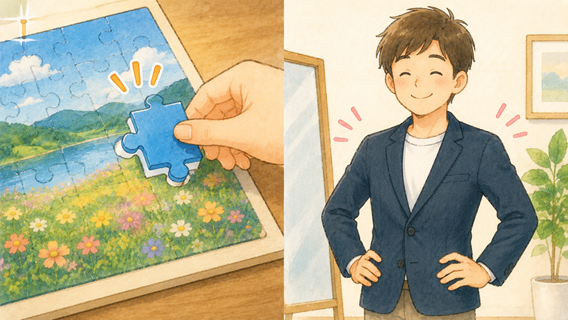
Example 1: The last puzzle piece (Pita!)
The final puzzle piece clicked into place —
pita!
Example 2: A perfectly fitting jacket (Pittari)
The jacket fit him perfectly, as if it had been tailored just for him —
pittari.
Try Using Them!
Something clicks perfectly into place?
→ Say pita!
Something fits exactly the way it should?
→ Say pittari
Pita! captures the satisfying moment.
Pittari describes the comfortable result.
One happens in an instant.
The other lasts as long as the perfect fit remains.
Two similar sounds—one celebrates the moment, the other celebrates the match.




Comments