
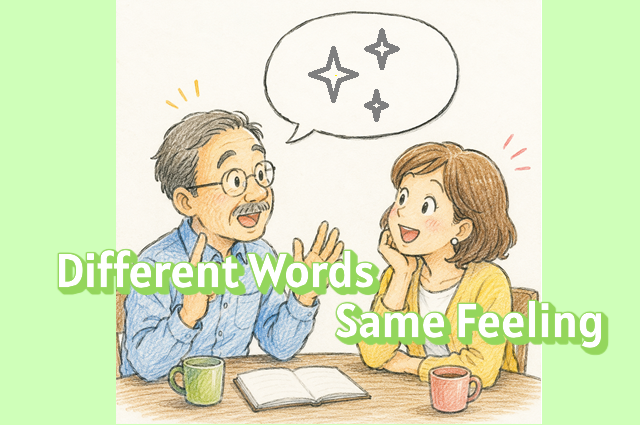
People all over the world laugh, cry, get excited, and feel nervous.
Yet different cultures often describe these feelings in different ways.
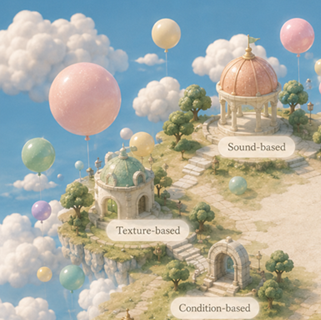
The Same Feeling, Different Words
An English speaker might say,
“My heart is racing.”
A Japanese speaker might say,
doki doki.
Both describe excitement or nervousness, but each language paints a slightly different picture.

Different Ways to See the World
Some languages use long descriptions.
Others prefer short expressions.
Japanese often uses sound words to make feelings and actions more vivid.
These expressions can tell us not only about a language but also about the culture behind it.
Discovering New Perspectives

Comparing expressions is not about deciding which language is better.
It is about seeing how people around the world experience the same emotions in different ways.
Learning a new expression can sometimes feel like looking at a familiar feeling from a completely new angle.
And that may be one of the most enjoyable parts of studying languages.






Comments