
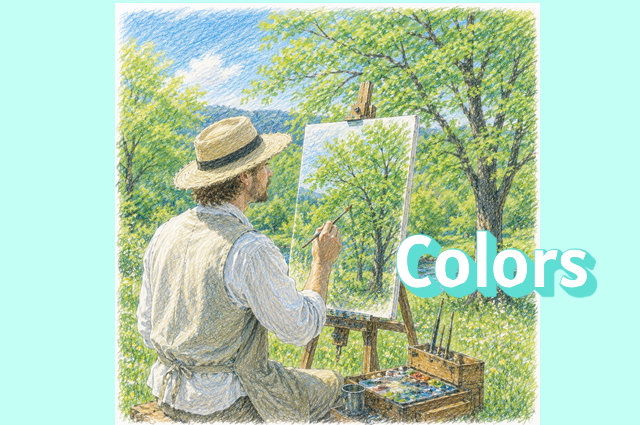
Imagine these scenes.
A glowing sunset.
A forest in midsummer.
Jet-black hair shining in the sun.
Japanese doesn’t simply call them
red,
green,
or black.
Instead, it often says:
aka aka
ao ao
kuro guro
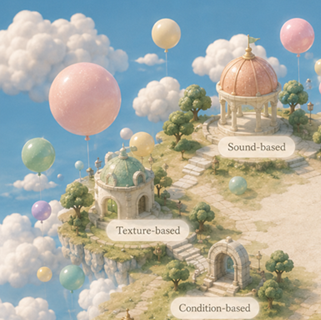
More Than Color
These expressions don’t simply describe what you see.
They also suggest how the scene feels.
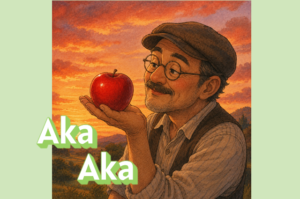
Aka Aka
doesn’t just mean “red.”
It feels warm, glowing, almost alive.
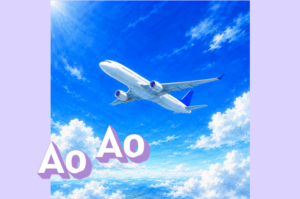
Ao Ao
isn’t simply green.
It suggests healthy plants full of life.
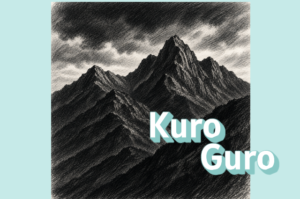
Kuro Guro
isn’t merely black.
It gives a sense of depth, richness, and quiet strength.
A Different Perspective
Interestingly,
none of these are considered traditional Japanese onomatopoeia.
Yet they resemble onomatopoeia in one important way.
They repeat sounds.
And that repetition makes the image feel more vivid.
Perhaps the repetition isn’t describing a sound.
Perhaps it is describing energy.
Our Perspective
At Puni Puni Dictionary,
we call expressions like these
Almost Onomatopoeia.
They don’t imitate sounds.
Instead,
they make colors feel alive.
Perhaps that’s why
Japanese landscapes often feel so vivid—
not only because of the colors themselves,
but because the language gives those colors movement, warmth, and life.
Final Thought
Sometimes,
Japanese doesn’t simply tell us
what color something is.
It quietly tells us
how that color feels.



Comments