
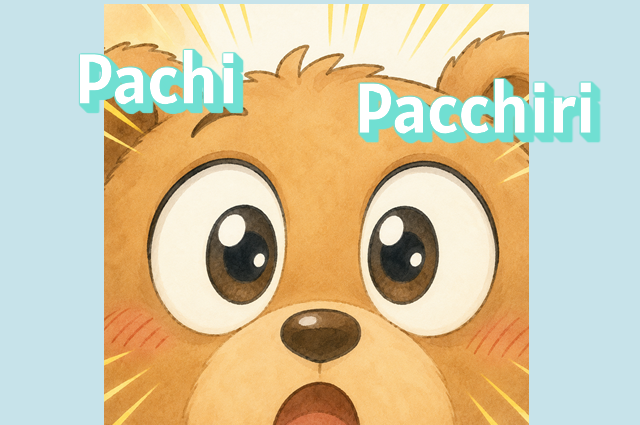
Have you ever opened your eyes in an instant?
Then noticed how wide open they stayed afterward?
Japanese uses two closely related expressions for these moments:
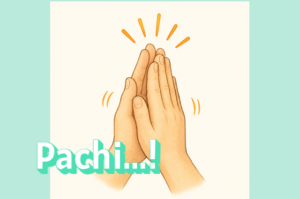
Pachi! (ぱちっ!)
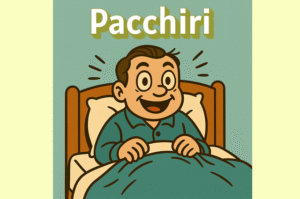
Pacchiri (ぱっちり)
These two words share the same origin, but today they are used quite differently.
Differences Between “Pachi!” and “Pacchiri”
| Expression | Focus | Nuance |
|---|---|---|
| Pachi! | A sudden instant | A quick snap, pop, click, or sudden movement |
| Pacchiri | A lasting state | Eyes wide open, bright, and alert |
In short:
- Pachi! → a quick, sharp instant
- Pacchiri → eyes fully open and alert
Examples in Daily Life
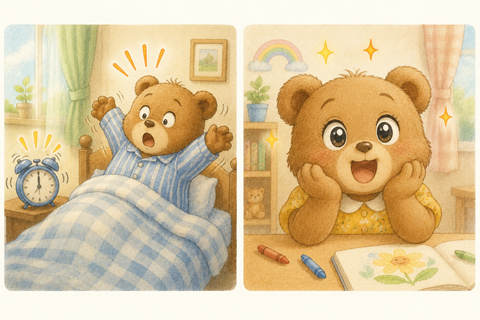
Example 1: Waking up (Pachi!)
The alarm rang, and she opened her eyes in an instant —
pachi!
Example 2: Bright eyes (Pacchiri)
The little girl had big, bright eyes that looked full of curiosity —
pacchiri.
Try Using Them!
Something happens in one quick snap?
→ Say pachi!
Someone’s eyes are wide open and bright?
→ Say pacchiri
Pachi! captures the sudden moment.
Pacchiri describes the lasting appearance.
The two words are related.
But over time, pacchiri became strongly associated with wide-open eyes.
One preserves the moment.
The other preserves the expression.



Comments