
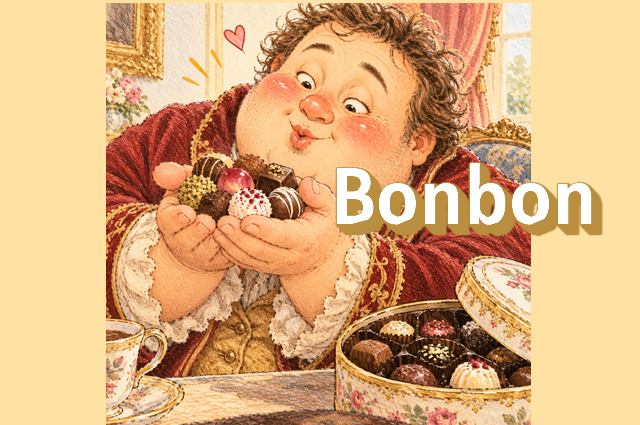
The French word bonbon means “candy.”
But if you are a Japanese speaker, something curious may happen when you hear it.
Bonbon.
Somehow, it sounds like candy.
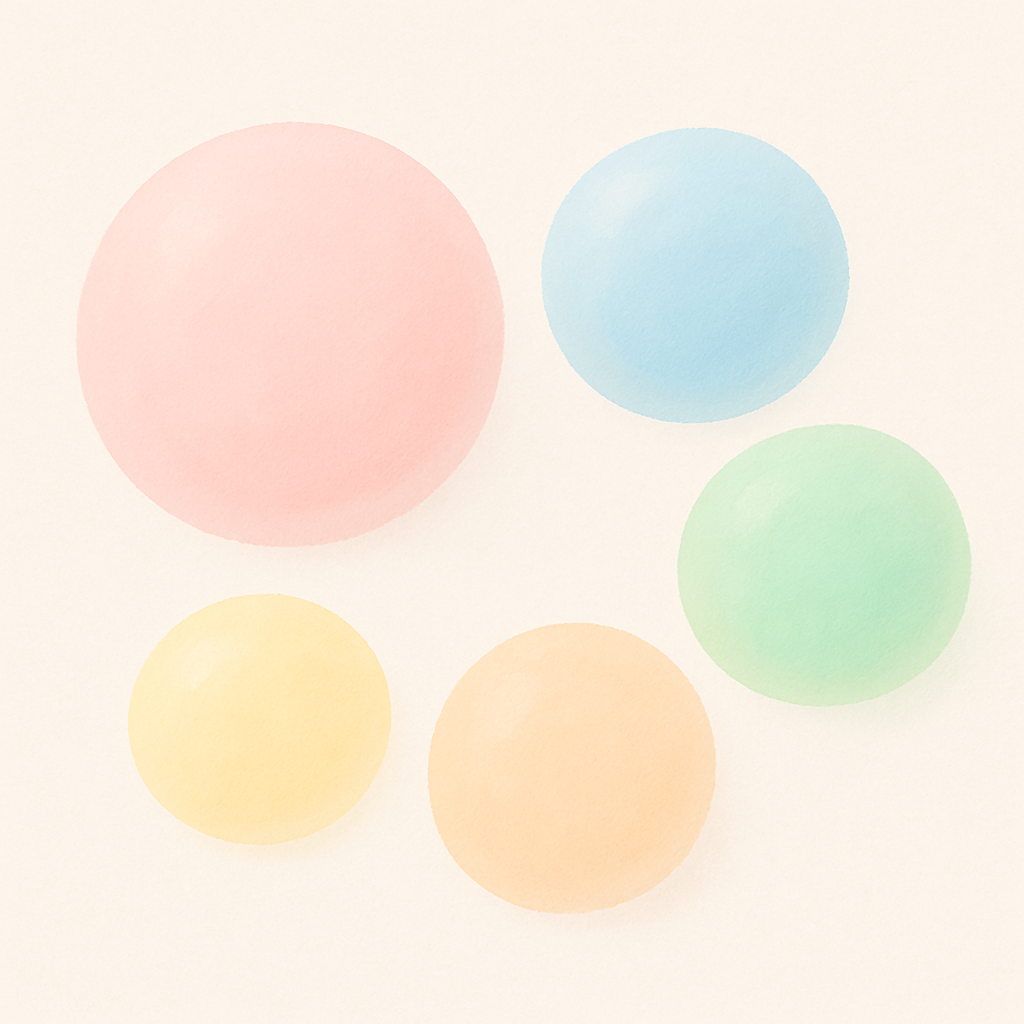
Small, round, colorful pieces of candy may come to mind. The repeated bon-bon even has a slightly bouncy, rounded feeling, a little like the sound patterns found in Japanese onomatopoeia.
But here is the interesting part.
Bonbon is not a Japanese-style sound word at all.

In French, bon means “good,” and bonbon developed from the repetition of bon. Its origin is connected with meaning — something good or pleasant — rather than an imitation of the shape or movement of candy.

Why Can Bonbon Feel so Perfectly “Candy-like” to Japanese Ears?
Perhaps Japanese speakers have become especially sensitive to connections between sound and sensation because Japanese is so rich in onomatopoeia and mimetic words.
But perhaps there is something more universal going on, too.

Research on sound symbolism has found that people can sometimes associate certain sounds with certain shapes.
A famous example is the bouba–kiki effect: many people tend to match a word like bouba with a rounded shape and kiki with a sharp, angular one.
So here is a little question from Puni Puni Dictionary.
When You Hear the Word Bonbon, What Does It Feel Like to You?
Does it sound round? Small? Sweet? Bouncy?
And if your first language is not Japanese, do you feel anything similar?
Maybe the sounds of words tell us a little more than their dictionary meanings do.











Comments