
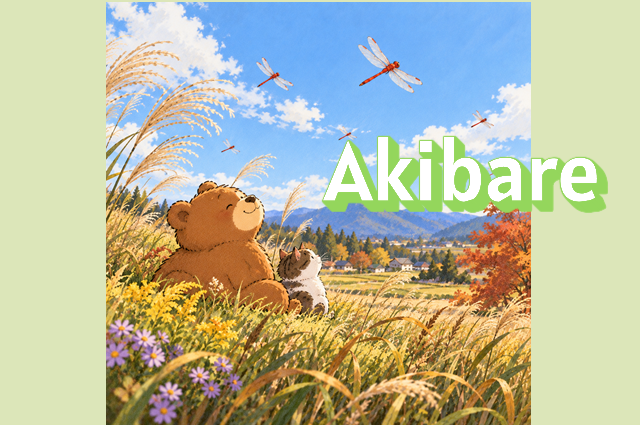
Japanese onomatopoeia is often explained one word at a time.
Kira kira means something sparkles.
Yura yura describes something gently swaying.
Shiin expresses deep silence.
But what happens when several of these sensory expressions come together?
Perhaps Japanese onomatopoeia can sometimes be understood less like a collection of separate words — and more like a jam session.
Different sounds play different parts.
And together, they create something that none of them could create alone.
Let’s Listen to “Akibare”
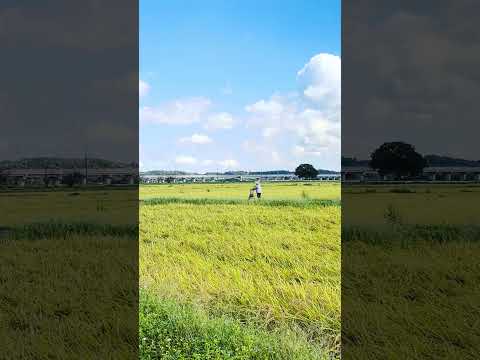
Take the Japanese word “akibare” (あきばれ/秋晴れ).
It refers to the clear, pleasant weather often experienced in autumn.
But a dictionary definition does not quite capture the whole scene.
Imagine stepping outside on a beautiful autumn morning in Japan.
The air feels dry and light.
The sky stretches clear and blue above you.
A gentle breeze passes by.
And somehow, everything feels fresh and clean.
What does that scene sound like in Japanese?

Kara! — The Dry, Crisp Air
Kara! (からっ!)
The air is no longer heavy with summer humidity.
It feels dry, crisp, and light.
“Kara!” gives us that first sensation of autumn air — a clean dryness you can almost feel on your skin.
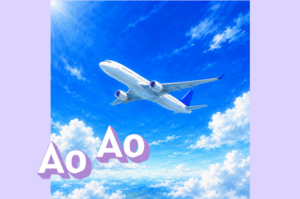
Ao Ao (あおあお) — The Blue Above
Ao ao
Look up.
The sky is vividly blue, stretching high overhead.
“Ao ao” expresses a rich, striking blueness.
It gives our autumn day its color.
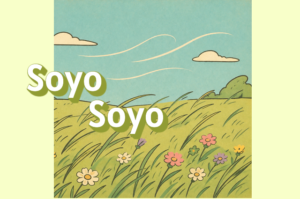
Soyo Soyo (そよそよ) — The Gentle Breeze
Soyo soyo…
A light breeze moves through the air.
Not the hot, heavy wind of summer.
Not yet the cold wind of winter.
Just a soft autumn breeze passing gently by.
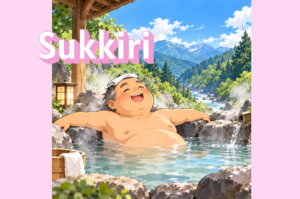
Sukkiri — How It All Feels
Sukkiri! (すっきり)
Clear.
Fresh.
Refreshing.
“Sukkiri” is not simply the sky, the air, or the wind.
It is almost the feeling that emerges when we experience them together.
And Then the Jam Session Begins
Now listen to them together.
Kara! brings the dry autumn air.
Ao ao brings the blue sky.
Soyo soyo brings the breeze.
Sukkiri brings the refreshing feeling of the whole scene.
Each expression is playing a different part.
None of them means “akibare.”
And yet, when they begin to play together…
Kara!
Ao ao.
Soyo soyo…
Sukkiri!
Suddenly, there it is.
Akibare.
Onomatopoeia Does Not Have to Play Solo
This is one way we like to explore Japanese at Puni Puni Dictionary.
An onomatopoeic expression can be fascinating on its own.
But sometimes, the real magic happens when several expressions meet.
One gives us color.
Another gives us movement.
Another gives us texture, sound, temperature, or mood.
They do not say the same thing.
They do not need to.
Like musicians in a jam session, each contributes something different to the scene.
And somewhere between them, a larger image begins to emerge.
Final Thought
Perhaps a Japanese word is not always something we have to understand through a single definition.
Sometimes, we can listen to the small sensations surrounding it.
Kara!
Ao ao.
Soyo soyo…
Sukkiri!
Four different expressions.
Four different parts.
One autumn day.
That is our little onomatopoeia jam session.
And together, they play “akibare.”
More Words Explained Through Onomatopoeia


Comments