
Sometimes, when we cannot remember the name of a song, we simply hum it.
“Da-da-da, da-da-da…”
These sounds do not have a dictionary meaning.
And yet, somehow, another person may understand exactly what we are trying to share.
Maybe rhythm can communicate something even before words do.
What Happens When Words Have Rhythm?
Japanese onomatopoeia is made of words, of course.
But many of those words also have a noticeable rhythm.
Waku waku.
Doki doki.
Yura yura.
Koro koro.
Their meanings are important, but their repeated sounds seem to add something more.
Waku waku does not simply tell us that someone is excited. Its bouncing rhythm almost seems to carry a little of that excitement with it.
More Than Meaning
Compare that with saying:
“I’m excited about what’s going to happen.”
The sentence explains the feeling clearly.
But waku waku seems to do something slightly different. Instead of only describing the feeling, its sound and rhythm help us sense it.
The same may be true of doki doki, with its repeated beat, or yura yura, whose gentle rhythm seems to sway back and forth.
In this way, Japanese onomatopoeia can sometimes feel unusually direct — as if meaning, sound, and movement arrive together.
Somewhere Between Language and Music?
Of course, Japanese onomatopoeia is language, not music.
But perhaps it uses something that music also uses: rhythm.
Music can communicate excitement, tension, calmness, or sadness without explaining those feelings in sentences.
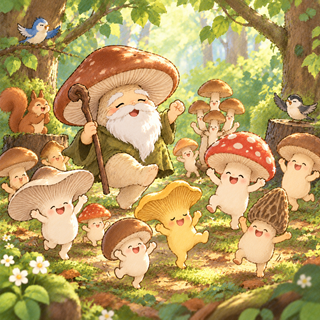
Onomatopoeia may do something similar on a much smaller scale.
A word has meaning.
But when that meaning comes with rhythm, perhaps we do not just understand it.
We feel a little of it, too.







Comments