
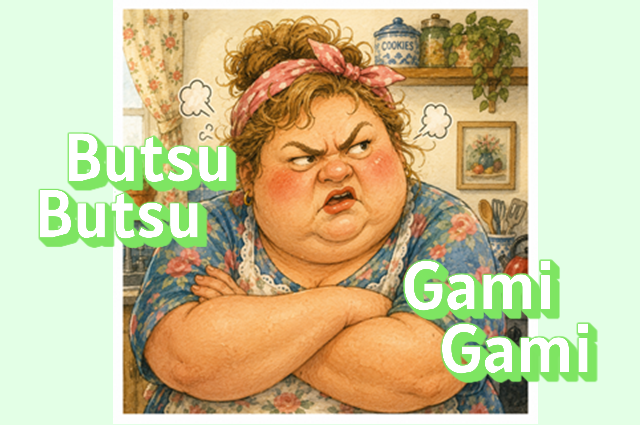
Have you ever quietly muttered complaints under your breath?
Or heard someone loudly scolding another person again and again?
In Japanese, these two very different ways of expressing displeasure can be described as:
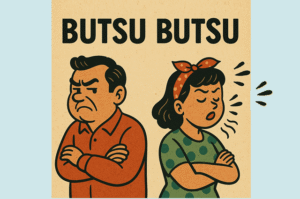
Butsu Butsu (ぶつぶつ)
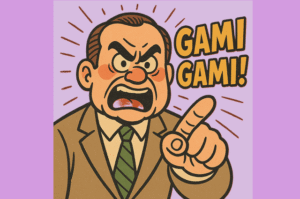
Gami Gami (がみがみ)
They both can involve complaining or expressing dissatisfaction, but the volume, direction, and intensity are quite different.
Differences Between “Butsu Butsu” and “Gami Gami”
| Expression | Meaning | Nuance |
|---|---|---|
| Butsu Butsu (ぶつぶつ) | Muttering complaints in a low voice | Quiet, grumbling, often under one’s breath |
| Gami Gami (がみがみ) | Loudly and repeatedly scolding or complaining | Harsh, forceful, directed at someone |
In short:
- Butsu butsu → quiet complaints muttered under your breath
- Gami gami → loud, repeated scolding directed at someone
Examples in Daily Life
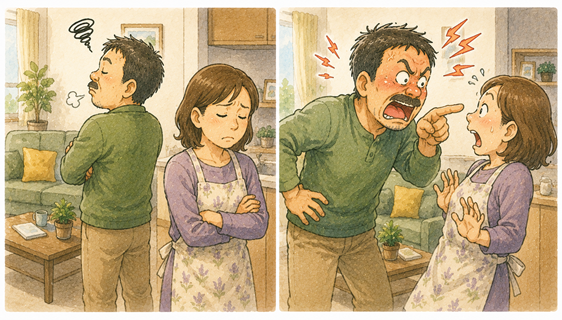
Example 1: Muttering after an argument (Butsu Butsu)
He turned his back and quietly complained to himself,
still unhappy about what had happened —
butsu butsu…
Example 2: Scolding someone loudly (Gami Gami)
He turned toward her and began scolding her loudly,
pointing his finger as he complained again and again —
gami gami!
Try Using Them!
Someone quietly grumbling to themselves in a low voice?
→ Say butsu butsu
Someone loudly and repeatedly scolding another person?
→ Say gami gami
Both can express dissatisfaction —
but one stays under the breath, while the other comes out loud and strong!







Comments