

In English-language anime and manga, sudden shock or anxiety is often expressed with words like “Caught Off Guard”, “Startled”, or “Uh-oh!”
These are the moments when a character freezes —
because they’ve been found out, made a mistake, or realized something they’d rather not face.
But how is that sharp, body-tingling tension expressed in Japanese?
Let’s step into the world of anime and manga and discover how Japanese onomatopoeia captures that instant of panic.
What Is a “Caught Off Guard” Moment?
It’s the moment your breath catches,
your stomach drops,
and your brain goes “Uh-oh…”
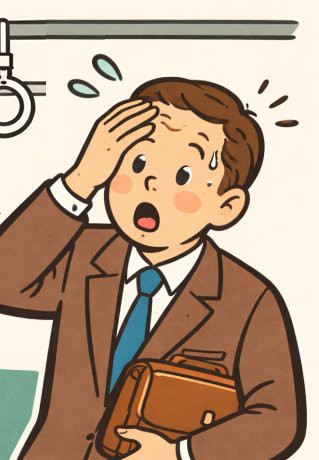
In anime and manga, this happens when:
- a student forgets their homework and the teacher calls on them
- someone overhears a secret they weren’t supposed to
- a guilty character is suddenly confronted
- a crush appears out of nowhere and says hi
In English, these moments are often described as:
- Caught Off Guard – Unprepared and surprised
- Startled / Alarmed – Nervous shock
- Nervous Jolt / Uh-oh! – A feeling of trouble or tension
- Gulp / Yikes! – Cartoonish expressions of sudden fear or guilt
So how does Japanese express that gulping inner reaction?
How Is This Feeling Expressed in Japanese?
Japanese onomatopoeia captures not just actions, but the emotional tics of the body —
and for those frozen, startled moments, the word is:
“Giku” (ぎくっ)
It’s the sound of your shoulders tightening,
your heart skipping a beat,
and the creeping dread of being busted.
Let’s hear how it sounds.
What Is Japanese Onomatopoeia “Giku” (ぎくっ) ?
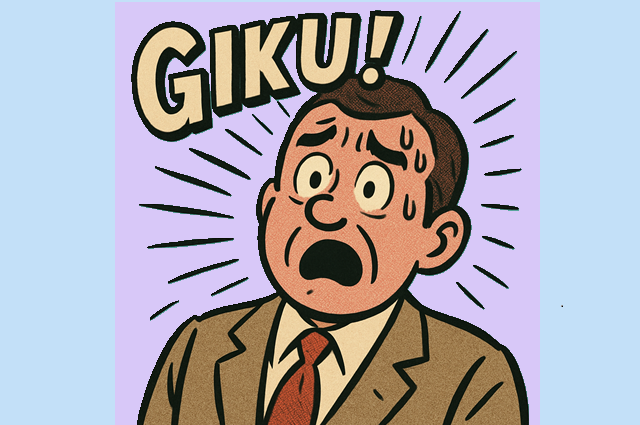
“Giku” is a Japanese onomatopoeia that expresses the moment of being startled, shocked, or caught off guard.
It’s short, sharp, and sudden —
almost like the sound of your muscles tensing up.
It often carries a sense of realization, guilt, or panic.
Used in:
- Feeling suddenly nervous or alarmed
- Realizing you’re in trouble
- Getting caught doing something you shouldn’t
- Hearing something that hits too close to home

Pronunciation
gee-koo
(Say it quickly and sharply — like a sudden stab of tension.)
Categories
Emotion / Motion
Examples in Daily Life
To learn about how it appears in manga or daily conversation, dive into the following page:
Examples









Comments