
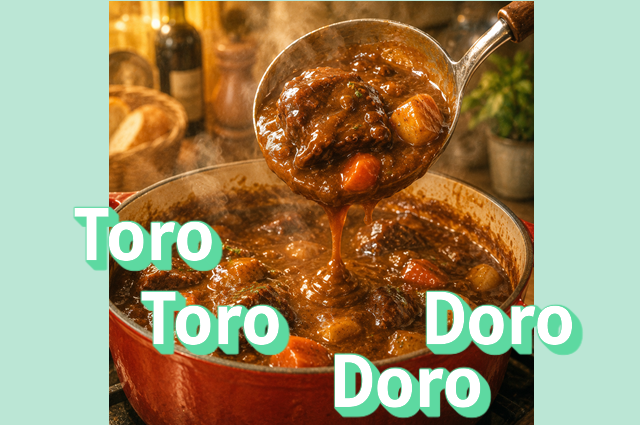
Have you ever seen thick mud slowly spreading everywhere?
Or watched melted cheese flow smoothly and deliciously?
In Japanese, these two expressions both describe soft, flowing textures — but the atmosphere and emotional feeling are very different:
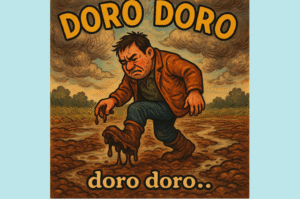
Doro Doro (どろどろ)
Toro Toro (とろとろ)
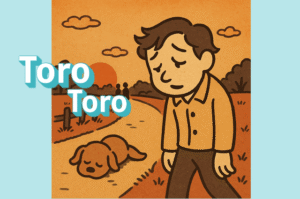
Both describe something thick and flowing, but one feels muddy and unpleasant, while the other feels smooth, soft, and comforting.
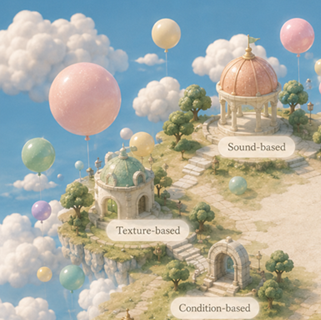
Differences Between “Doro Doro” and “Toro Toro”
| Expression | Meaning | Nuance |
|---|---|---|
| Doro Doro (どろどろ) | Thick, muddy, messy texture | Heavy, dirty, unpleasant, chaotic |
| Toro Toro (とろとろ) | Soft, smooth, melting texture | Creamy, gentle, delicious, relaxed |
In short:
- Doro doro → muddy, messy thickness
- Toro toro → smooth, melting softness
Examples in Daily Life
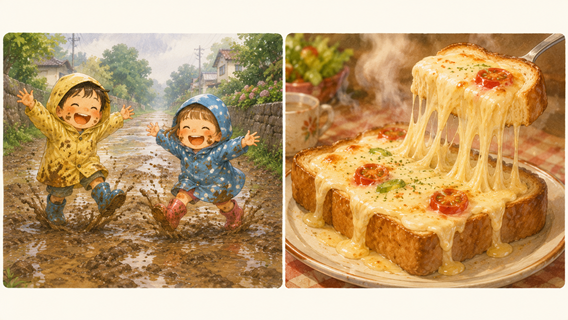
Example 1: Muddy road (Doro Doro)
After the heavy rain,
the road became thick and muddy —
doro doro…
Example 2: Melting cheese (Toro Toro)
The cheese melted beautifully over the hot bread —
toro toro…
Try Using Them!
Mud, messy liquid, or emotionally toxic situations?
→ Say doro doro
Melted cheese, soft eggs, or smooth creamy texture?
→ Say toro toro
Both are thick and flowing —
but the emotional feeling is completely opposite!







Comments