
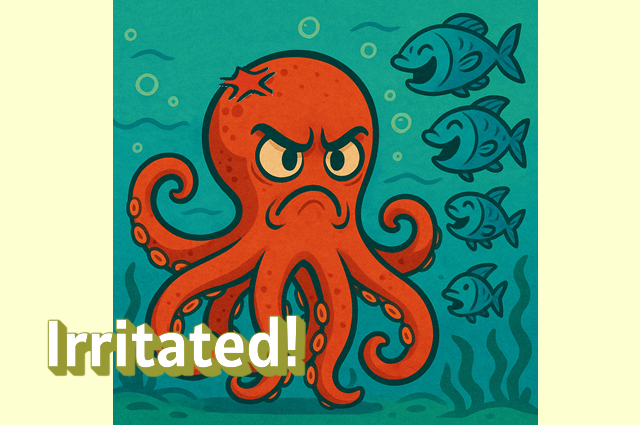
In English-language anime and manga, sudden flashes of irritation are often described with words like “Ugh!”, “Irritated!”, or “Oh, come on!”
These are the moments where frustration hits you out of nowhere —
your eyebrow twitches, your jaw tightens, and you feel it rising before you can stop it.
But how are these emotions captured in the original Japanese?
Let’s dive into the world of anime and manga and discover how Japanese onomatopoeia expresses that burst of anger.
What Is a “Snap of Anger” Moment?
It’s not full-on rage.
It’s that instant spike — the heat rising in your chest when something really ticks you off.
In anime and manga, this happens when:
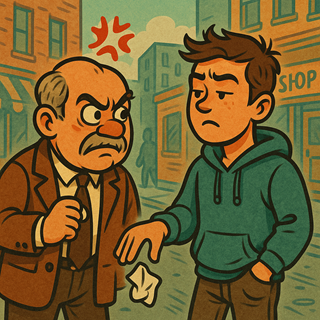
- a character gets insulted out of nowhere
- someone is being obviously unfair
- you stub your toe, spill your drink, or hear something so annoying
- you’re doing your best and someone ruins it
In English, these moments are usually described as:
- Irritated – Annoyed and short-tempered
- Annoyed – Mild but sharp frustration
- Ticked Off / Fed Up – Reaching the limit of patience
- Ugh! / What the—?! – Sudden emotional reaction
So how does Japanese give this snap of anger a sound?
How Is This Feeling Expressed in Japanese?
In Japanese, emotions often have sound effects —
even irritation and micro-bursts of anger!
The perfect word for this kind of emotional flare-up is:
“Muka!” (むかっ!)
It’s the sound of a sudden surge of irritation —
a vein popping, a nerve twitching, or your blood pressure jumping just a little too fast.
Let’s hear how it sounds.
What Is Japanese Onomatopoeia “Muka!” (むかっ!)?
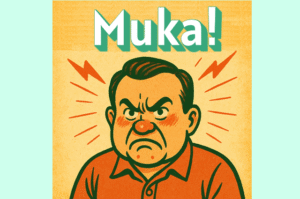
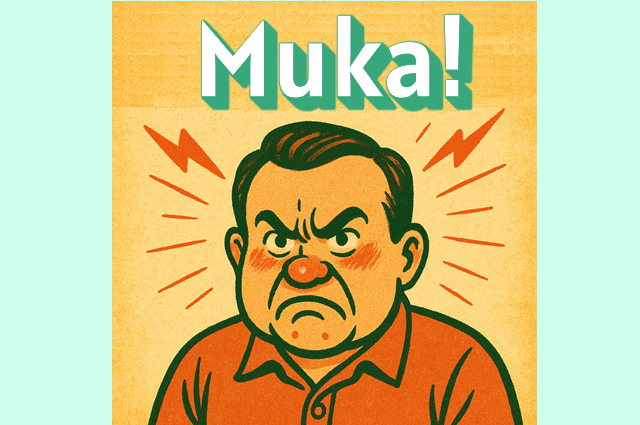
“Muka!” is a Japanese onomatopoeia that expresses a burst of irritation or anger.
It’s not slow-burning rage —
it’s the flare that hits fast and sharp, like a snap you can’t suppress.
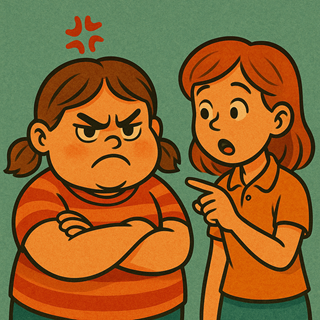
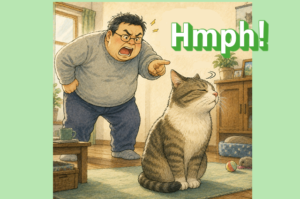
You’ll see it in manga and anime when a character’s anger visibly sparks —
cheeks twitching, steam rising, fists clenched.
Used in:
- Getting unexpectedly angry
- Being pushed too far with annoying behavior
- A “You’ve got to be kidding me!” moment
- Manga/anime expressions with exploding temples
Pronunciation
moo-kah! (with an upward, irritated pitch)
Categories
Emotion
Examples in Daily Life
To learn about how it appears in manga or daily conversation, dive into the following page:
Examples






Comments