
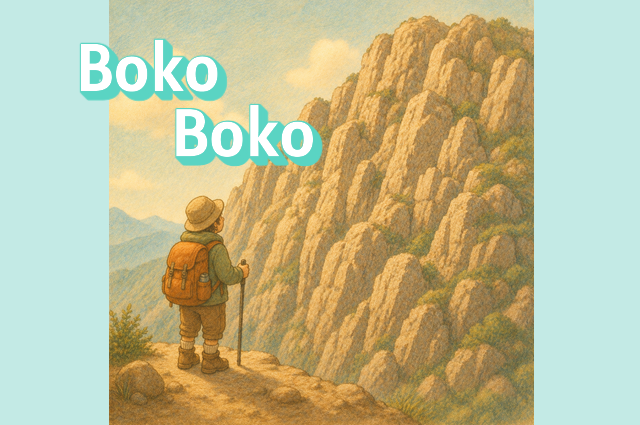
Have you ever touched a surface full of bumps and dents?
Or seen something swollen or sticking out unevenly?
That rough, uneven texture in Japanese is expressed as:
“Boko Boko” (ぼこぼこ)
Let’s hear how it sounds!
What is “Boko Boko” (ぼこぼこ)?
“Boko Boko” describes:
- A surface that is uneven, bumpy, or dented
- Something with parts sticking out irregularly
- Repeated raised or damaged areas
It’s often used for:
- Roads or walls with bumps
- Skin swelling after impact
- Objects that are rough or deformed
Pronunciation
boh-koh boh-koh
(Say it heavily — like bumps repeating across a surface.)
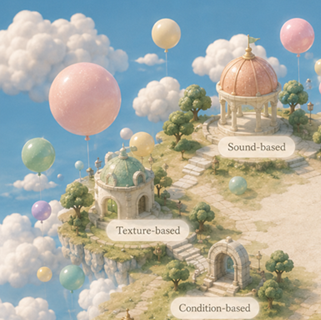
Categories
Texture / Visual / Condition
What Does “Boko Boko” Look Like?
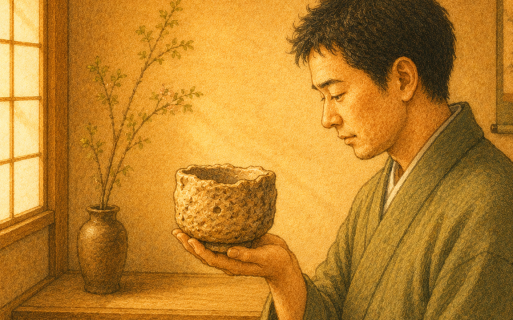
It looks like a dented metal surface.
Like bumps rising unevenly.
Like a rough texture with no smoothness.

How Do You Say It?
Say it with a rough rhythm:
Boko boko…
Like uneven shapes repeating again and again.
Example in Daily Life
Example: A rough road
The old road was full of bumps —
boko boko…

Cultural Note
In English, you might say:
- “Bumpy”
- “Uneven”
- “Lumpy”
But “boko boko” has a stronger visual feeling.
It suggests:
Noticeable raised or dented areas
Repeated irregularity
Roughness you can both see and feel
Watch & Feel the “Boko Boko” World!
Feel the “Boko Boko” — LEGO Blocks

Try Using It!
When something feels uneven…
When bumps stand out clearly…
When a surface loses smoothness…
Say it naturally:
Boko boko〜














Comments