
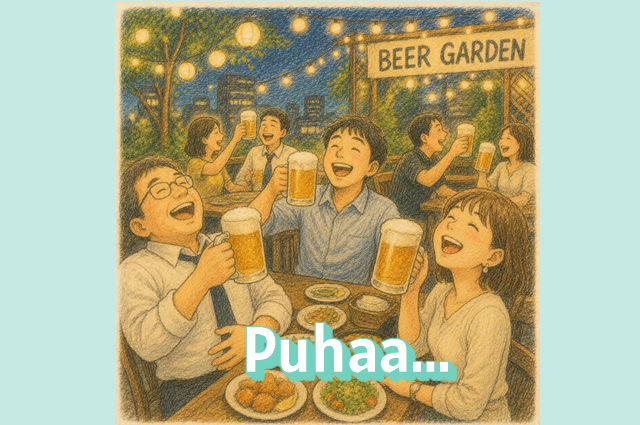
In English, we often express the feeling after taking a refreshing drink with phrases like:
- Ahhh…
- Phew!
- What a relief!
- So refreshing!
It’s that happy breath that escapes naturally after a long drink.
You don’t decide to say it.
It simply comes out when you’re finally refreshed.
But how does Japanese express that satisfying moment?
Let’s discover one of Japan’s most refreshing onomatopoeia.
What Is a “Refreshing Drink” Moment?
It’s when:
- You finish an ice-cold drink
- You finally quench your thirst
- You let out a happy breath without thinking
- You feel completely refreshed
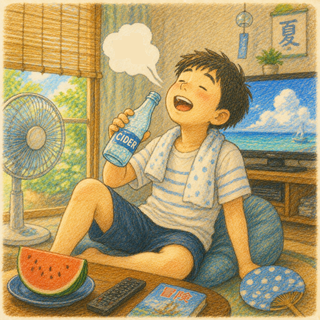
In English, we might say:
- Ahhh… – A satisfied sigh
- Phew! – A breath of relief
- So refreshing! – Expressing refreshment
- That hit the spot! – A drink that was exactly what you needed
Japanese captures all of these feelings with one cheerful sound.
How Is This Feeling Expressed in Japanese?
Japanese often turns little everyday reactions into expressive sounds.
The standout word for that refreshing, satisfied breath is:
“Puhaa” (ぷはー)
It expresses the joyful breath that comes after drinking something refreshing.
Let’s hear how it sounds.
Japanese speakers often say “Puhaa…” after taking the first sip of an ice-cold drink or finishing a hard day’s work.
Rather than describing the taste itself, it expresses the refreshing feeling that naturally escapes as a satisfied breath.

What Is Japanese Onomatopoeia “Puhaa (ぷはー)”?
“Puhaa” describes:
A Satisfied Breath After Drinking
- Finishing a cold drink
- Taking a deep, happy breath
- Enjoying a moment of satisfaction
Refreshment and Relief
- Cooling down on a hot day
- Relaxing after hard work
- Feeling your thirst disappear
A Natural Exclamation
- An involuntary happy sigh
- A spontaneous reaction
- A sound that expresses pure satisfaction
It’s more than simply saying a drink was delicious.
It’s the sound your body makes when it feels refreshed.
Pronunciation
poo-hahh
(Let the second part stretch out naturally, like a long, satisfied breath.)
Category
Sound
Examples in Daily Life
To see how Japanese people naturally use Puhaa in conversations and stories, explore the page below.
Examples









Comments